Updates on new and changing regulations plus best practice in health, safety, quality and environment

Seven Famous Laws of Life and Productivity – and What They Can Teach Us About Health & Safety

Seven Famous Laws of Life and Productivity – and What They Can Teach Us About Health & Safety

There are plenty of so-called “laws” that we come across in everyday life.  Some are serious scientific principles; others are observations about human behaviour that have become part of popular culture.

  1. The Pareto Principle tells us that roughly 80% of the results can come from 20% of the effort.
  2. Parkinson’s Law tells us that work tends to expand to fill the time available for its completion.
  3. Murphy’s Law tells us that if something can go wrong, it probably eventually will.

They are not laws in the legal sense, of course. But they can be surprisingly useful when we apply them to the way we manage health and safety.

In the UK, employers have a legal responsibility to protect employees and others who may be affected by their work. Health and safety management is not simply about producing policies and filling in risk assessment forms. It is about identifying significant risks, putting sensible controls in place and making sure those controls continue to work.

So, what can seven of the most famous laws of life and productivity teach us about health and safety?

1. The Pareto Principle – focus on the risks that matter most

The Pareto Principle, commonly known as the 80/20 rule, is the observation that a relatively small number of causes can account for a disproportionately large proportion of the results.

It isn’t literally 80/20 in every situation.

But the principle is extremely useful in health and safety.

Think about your workplace.

You might have:

  • dozens of risk assessments
  • hundreds of pages of procedures
  • a long list of workplace inspections
  • numerous items of PPE
  • training records
  • COSHH assessments
  • method statements
  • policies and forms.

But which risks are actually capable of causing serious harm? Those are the risks that deserve the greatest attention. A manufacturing business might have hundreds of hazards, but machinery guarding, work at height, vehicle movements, hazardous substances or exposure to dust could account for a much greater proportion of the potential for serious injury or ill health.

The same applies to construction. You may have a very long list of site rules, but if people are regularly working at height, operating plant, excavating, lifting loads or working around moving vehicles, those activities deserve particularly careful consideration.

This is broadly consistent with the HSE’s approach to risk assessment: identify the hazards, decide who may be harmed, evaluate the risks and implement appropriate controls. The objective is not to create paperwork for every conceivable possibility. It is to control the risks that matter.

The health and safety lesson

Don’t confuse the amount of paperwork with the quality of your safety management.

Ask yourself:  “What are the few things we do here that could realistically kill or seriously injure somebody?”

Then make sure those risks are properly controlled.


2. Parkinson’s Law – don’t give safety work unlimited time

Parkinson’s Law is often expressed as: Work expands to fill the time available for its completion.

Anyone who has worked in business will recognise this.  Give someone a week to complete a task and it takes a week, give them three months and, quite often, it takes three months.

Health and safety can suffer from exactly the same problem, consider a risk assessment. There is nothing wrong with taking time to conduct a thorough assessment. In fact, for complex or high-risk activities, proper assessment is essential. But a risk assessment should not become an academic exercise that takes months to produce while the actual hazard remains uncontrolled.

The important question isn’t:  “Have we completed the paperwork?”

It is:  “Have we controlled the risk?”

The HSE is very clear that risk assessment is part of a wider process of managing risk. The controls need to be implemented and reviewed to make sure they remain effective. For example, if an inspection identifies an unguarded machine, there is little value in spending six weeks discussing how to word the risk assessment while the machine remains unguarded  –  Fix the machine, then document what you have done.

The health and safety lesson

Don’t allow safety paperwork to become a substitute for safety action.  Good health and safety should support the business, not create an endless administrative workload.


3. Murphy’s Law – assume that things will eventually go wrong

Murphy’s Law is probably the most famous of all these principles: If something can go wrong, it will eventually go wrong.  Health and safety professionals don’t need much convincing about this one!

  • A machine that has operated perfectly for five years can fail.
  • A worker who has never previously fallen can trip.
  • A delivery driver can take the wrong route around a site.
  • A contractor can misunderstand an instruction.
  • A chemical container can be left in the wrong place.
  • A control measure that worked perfectly yesterday can be bypassed today.

This doesn’t mean that accidents are inevitable, quite the opposite in fact.  It means that effective safety management should anticipate failure.

Ask:

  • What happens if the guard fails?
  • What happens if the operator makes a mistake?
  • What happens if the power fails?
  • What happens if the normal procedure cannot be followed?
  • What happens if a new or inexperienced employee carries out the task?
  • What happens if the contractor doesn’t understand our site rules?
  • What happens if someone ignores the instruction?

This is one reason why robust risk assessment is so important.  The HSE advises employers to consider how people actually work, including non-routine activities such as maintenance and cleaning, and to learn from accidents and ill health.  A good control system should not depend upon everybody behaving perfectly all of the time.

The health and safety lesson  Design your controls for real life, not an imaginary workplace where nothing ever goes wrong.


4. Hofstadter’s Law – complex safety work will probably take longer than expected

Hofstadter’s Law is another popular observation about planning:  It always takes longer than you expect, even when you take into account Hofstadter’s Law.

This is particularly relevant to complex health and safety projects.

Perhaps you are:

  • installing a new production line
  • moving premises
  • introducing a new chemical
  • changing a manufacturing process
  • undertaking a major construction project
  • implementing ISO 45001
  • completing a significant refurbishment
  • introducing new machinery.

The temptation is to concentrate on the obvious deadline:  “The new process needs to be operational on 1 October.”

But safety needs to be built into the project from the beginning.

  • What about commissioning?
  • Training?
  • Competence?
  • Maintenance?
  • Emergency arrangements?
  • COSHH?
  • Noise?
  • Dust?
  • LEV?
  • Fire safety?
  • Access and egress?
  • Contractor management?
  • Statutory inspections?

The HSE’s Plan, Do, Check, Act approach is deliberately cyclical. Health and safety arrangements need to be planned, implemented, monitored and reviewed rather than treated as a one-off exercise.

The health and safety lesson  If a change is important enough to the business to require a project plan, it is important enough to have health and safety built into that plan from the start.

Don’t bolt safety on at the end.


5. The Peter Principle – competence matters

The Peter Principle is the humorous observation that people in organisations can be promoted until they reach a position at which they are no longer competent.  There is a serious health and safety lesson here.

Being good at one job does not automatically make somebody competent to manage the safety risks of another.

  1. A highly skilled engineer isn’t necessarily a competent health and safety adviser.
  2. A brilliant machine operator isn’t automatically competent to design a machinery safeguarding system.
  3. An experienced employee isn’t necessarily competent to carry out a specialist LEV examination.
  4. And someone who has completed a short training course doesn’t necessarily have the experience required to manage a complex, high-risk activity.

The HSE defines competence in terms of a combination of training, skills, experience and knowledge, together with the ability to apply these appropriately. It also stresses that competence needs to be relevant and proportionate to the work being undertaken.  This is particularly important when appointing contractors and consultants.  The cheapest person on paper isn’t necessarily the cheapest option if their advice is unsuitable or fails to identify the significant risks.

The health and safety lesson  Competence is about more than holding a certificate.

Ask whether the person actually has the knowledge, experience and practical ability needed for the task.


6. Goodhart’s Law – when a measure becomes a target, it can stop being a good measure

Goodhart’s Law is particularly interesting for health and safety.

It is commonly expressed as:  When a measure becomes a target, it ceases to be a good measure.

Imagine a company decides that it wants to improve its safety performance.

It introduces a target:

“Zero accidents.”

That sounds excellent.

But what happens if employees become reluctant to report minor accidents or near misses because they don’t want their department to lose its “zero accident” status?  The statistics might look better.  The workplace might not be any safer.

The same problem can occur with:

  • number of safety observations completed
  • number of inspections
  • number of toolbox talks
  • number of audits
  • number of risk assessments completed
  • number of training hours.

These figures can be useful, but they are leading indicators, not proof that risks are actually being controlled.  The HSE emphasises the importance of monitoring and reporting health and safety performance, but the purpose is to understand whether the management system is actually working.  A company could complete 500 inspections and still have an unsafe workplace.  Alternatively, a company might complete fewer inspections because its risk profile is different — while still having excellent control of its significant risks.

The health and safety lesson  Measure what matters, not simply what is easy to count.

Don’t ask only:  “How many safety activities have we completed?”

Also ask:  “What has actually changed as a result?”


7. Occam’s Razor – the simplest effective control is often the best

Occam’s Razor is the principle that, when faced with competing explanations, the simplest one is generally preferable, provided it adequately explains the evidence.  There is a useful parallel in health and safety:  Don’t make safety more complicated than it needs to be.

The objective is not to eliminate every possible risk from existence, the objective is to control risks so far as is reasonably practicable.  That distinction matters.

Suppose employees regularly trip over a trailing cable.

You could produce:

  • a new policy
  • a detailed risk assessment
  • a training presentation
  • a toolbox talk
  • an inspection checklist
  • a warning poster.

Or you could ask:  “Why is the cable there?”

Perhaps the better answer is simply to move the equipment, reroute the cable or install a suitable fixed connection.  The HSE’s guidance is clear that risk management should focus on practical measures and that employers are not expected to eliminate every risk. Controls should be sensible, proportionate and reasonably practicable.  Sometimes the best safety solution is surprisingly simple.

The health and safety lesson  Before writing another procedure, ask whether you can remove the hazard or control it at source.


Bringing the seven laws together

When you put all seven principles together, they produce a surprisingly useful approach to health and safety management.

1. Pareto

Focus on the risks that matter most.

2. Parkinson

Don’t let paperwork expand indefinitely.

3. Murphy

Expect things to go wrong and build resilience into your controls.

4. Hofstadter

Allow enough time for safety to be properly considered when things change.

5. Peter

Make sure the people responsible are actually competent.

6. Goodhart

Don’t mistake safety statistics for safety performance.

7. Occam

Use the simplest effective control wherever possible.

And there is an important point behind all seven.  Good health and safety management is really good management.

The HSE’s HSG65 guidance describes health and safety management as an integral part of good management rather than something that should sit separately from the way the organisation is run. Its Plan, Do, Check, Act model provides a practical framework for doing exactly that.

The final law: make it work in the real world

There is one final principle that perhaps matters more than all the others:

A safety system is only as good as its implementation.

  • You can have excellent policies.
  • You can have beautifully written risk assessments.
  • You can have impressive training records.
  • You can have an excellent safety management system.

But if the controls don’t work in the workplace, they are not doing their job.  The HSE itself advises that competent health and safety advice should be specific to the risks in the workplace, concentrate on practical action and avoid generating paperwork simply for its own sake.

That is why we believe good health and safety consultancy should be practical.

  • It should help you understand the risks.
  • It should help you prioritise them.
  • It should give you sensible solutions.

And, most importantly, it should help you put those solutions into practice. After all, the purpose of health and safety isn’t to produce a perfect folder.

It’s to make sure people go home safe at the end of the working day.

Posted by Roger Hart

Driving for work, speed versus safety and why it matters


Driving Speed vs. Arrival Time: The Hidden Safety, Cost, and Efficiency Reality

Whether managing a fleet of commercial vehicles or driving between site visits, business leaders and safety managers are often asked: Does driving faster actually save meaningful time?
The instinct to travel at or slightly above the speed limit is driven by the perception that higher speeds yield significant time savings. However, when we analyse the physics of driving alongside real-world traffic dynamics and vehicle efficiency data, the math tells a strikingly different story.
We should take time to examine the trade-offs between driving speed, arrival times, braking distances, and vehicle operational costs—and why encouraging a calmer pace on the road is one of the simplest driving safety improvements an organisation can make.

1. The Myth of Speed and Arrival Times

Travel time follows a non-linear formula. Because of this relationship, raising speed at higher baselines yields rapidly diminishing returns in actual time saved.
To see how this works in practice, consider the actual travel times across varying distances at steady speeds from 40 mph to 80 mph:

Travel Time Comparison (Minutes)

Trip Distance40 mph50 mph60 mph70 mph80 mph
10 miles15.0 mins12.0 mins10.0 mins8.6 mins7.5 mins
30 miles45.0 mins36.0 mins30.0 mins25.7 mins22.5 mins
60 miles90.0 mins72.0 mins60.0 mins51.4 mins45.0 mins

Key Takeaways for Drivers

  • Diminishing Returns: Increasing speed from 40 to 50 mph over a 30-mile journey saves 9 minutes. However, pushing from 70 to 80 mph over that same distance saves just 3.2 minutes.
  • The Real-World Traffic Equalizer: Over a standard 10-mile commute or urban route, accelerating from 60 mph to an illegal 80 mph theoretically saves just 2.5 minutes. In reality, junction queues, traffic signals, and roundabouts eliminate these minor gains almost entirely.


2. The Exponential Safety Cost: Physics & Stopping Distances

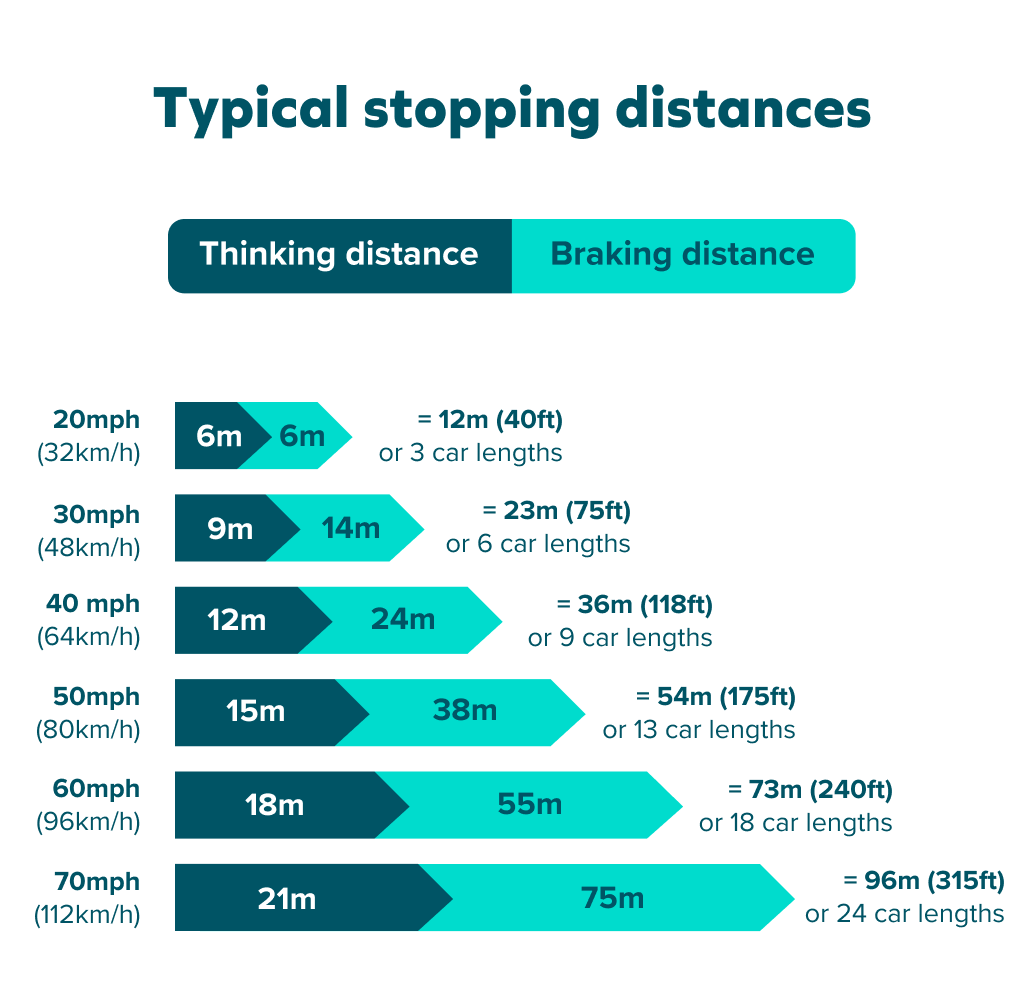
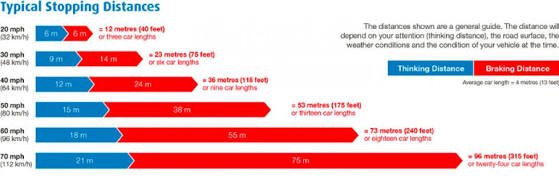
While travel time decreases linearly with speed, kinetic energy increases quadratically. Doubling a vehicle’s speed quadruples the kinetic energy that must be dissipated during braking or absorbed during an impact. Total stopping distance combines thinking distance (reaction time, averaged at 1.5 seconds) and braking distance:

Stopping Distance & Energy Matrix

SpeedThinking DistanceBraking DistanceTotal Stopping DistanceKinetic Energy (Ek​∝v2)
40 mph27 m (88 ft)24 m (80 ft)51 m (168 ft)Baseline (1.0x)
50 mph34 m (110 ft)38 m (124 ft)72 m (234 ft)+56% increase
60 mph40 m (132 ft)55 m (180 ft)95 m (312 ft)+125% increase
70 mph47 m (154 ft)75 m (245 ft)122 m (399 ft)+206% increase
80 mph54 m (176 ft)98 m (321 ft)152 m (497 ft)+300% increase

Critical Safety Impacts

  • Tripled Stopping Distance: Increasing speed from 40 mph to 80 mph increases overall stopping distance from roughly 12 car lengths to over 36 car lengths (152 metres).
  • Narrowed Hazard Window: At 70 mph, a driver travels over 30 metres per second before their foot even touches the brake pedal.
  • Collision Severity: According to UK road safety research and Health and Safety Executive (HSE) workplace road safety guidance, speed is a primary driver in crash severity. At higher speeds, safety features such as crumple zones and air bags reach physical limits, significantly increasing the probability of serious injury or fatality.


3. Fuel Efficiency, EV Range, and Commercial Costs

Aerodynamic drag escalates with the square of speed, meaning the power required to overcome drag increases with the cube of speed.
SpeedAerodynamic Drag (vs 50 mph)ICE Fuel Economy ImpactEV Battery Range Impact
40 mph~36% lowerOptimal urban efficiencyPeak efficiency range
50 mphBaseline (100%)Near peak fuel economy (~55–65 mpg)~3.8–4.2 miles/kWh
60 mph+44% higher~10–15% drop in mpg~3.2–3.5 miles/kWh
70 mph+96% higher~20–25% drop in mpg~2.5–2.8 miles/kWh
80 mph+156% higher~35–40% drop in mpg~1.9–2.2 miles/kWh

Commercial Considerations for Fleets

  1. EV Battery Penalties: For organisations operating electric vehicles, driving at 80 mph instead of 60 mph cuts battery range by up to 35%. The few minutes saved on the motorway are quickly lost waiting at rapid charging points.
  2. Maintenance and Wear: Higher speeds accelerate tyre degradation and brake pad wear, increasing ongoing fleet maintenance costs.
  3. Duty of Care: Under UK health and safety law (including the Health and Safety at Work etc. Act 1974), employers have a legal duty to ensure, as far as reasonably practicable, the health and safety of employees driving for work purposes. Promoting defensive, pace-managed driving aligns with risk assessment obligations and reduces insurance liabilities.


Summary: The Smarter Pace

Choosing to drive at 60 mph instead of 80 mph on a 30-mile journey:
  • Costs: Adds roughly 7.5 minutes to your travel time;
  • Saves: Cuts stopping distance by 57 metres (185 feet), halves vehicle kinetic energy, improves fuel or energy efficiency by up to 30%, and lowers driver stress.
For risk managers, fleet operators, and individual motorists alike, setting realistic journey schedules and adopting a modest speed profile delivers measurable returns in safety, sustainability, and compliance.

Need Guidance on Driving at Work Policies?

From fleet risk assessments to driver safety policy reviews, ensuring your employees remain safe on the roads is a vital part of health and safety management. Contact the team at Outsource Safety to learn more about our competent person schemes and workplace safety support packages.
Posted by Roger Hart

Slips and Trips: What Employers Need to Know

Of all the complex workplaces in which we support our clients, across arts and sciences or additive manufacture, and the thousands of clients we have helped one accident keeps recurring: slips and trips. Find out more about their causation and how you can help prevent them in our guidance below.

If you are a Safety~net competent person scheme member, please contact us for further specific advice and guidance.slips trips

HSE Slips and Trips Guidance: What Employers Need to Know

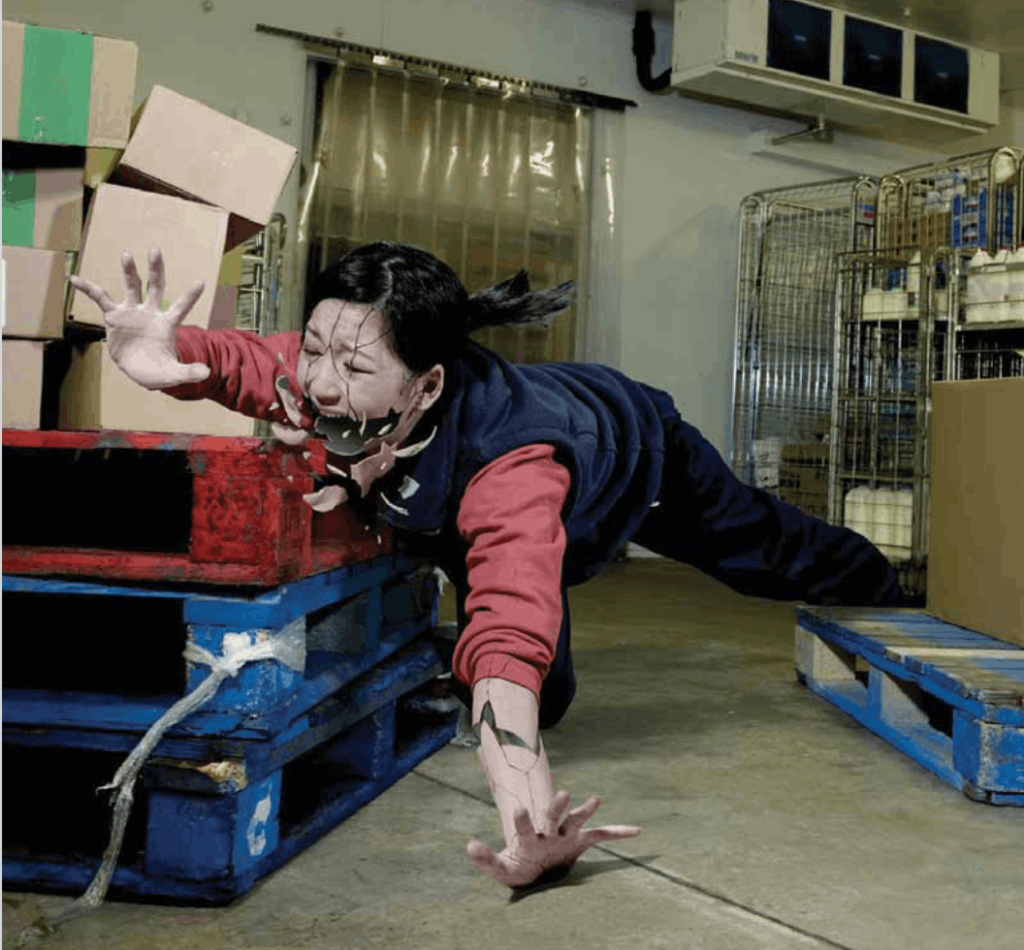
Slips, trips and falls remain one of the most common causes of workplace injury in Great Britain – and the latest HSE statistics demonstrate that this is still a significant issue for employers.

In 2024/25, 30% of employee non-fatal injuries reported under RIDDOR were attributed to slips, trips or falls on the same level, making this the most common reported accident category. These incidents are often preventable, yet they continue to cause injuries, lost working time and disruption to businesses.

The Health and Safety Executive has recently highlighted the practical steps employers can take to prevent slips and trips, focusing on the underlying causes rather than simply reacting when an accident occurs.

For employers, the message is straightforward: slips and trips should not be regarded as an unavoidable part of running a workplace.

Why are slips and trips such a significant workplace risk?

A slip or trip can appear to be a relatively minor incident, but the consequences can be much more serious.

A fall can result in fractures, sprains, muscular injuries or head injuries. In some circumstances, a slip or trip can also result in a person falling from height, coming into contact with machinery or being struck by a vehicle.

The HSE’s latest guidance breaks the problem down into two areas: slips and trips.

For slips, the HSE identifies six key factors which can contribute to an accident:

  • Contamination
  • Cleaning
  • People
  • Flooring
  • Environment
  • Footwear

For trips, the majority are associated with obstructions in walkways, with uneven surfaces accounting for many of the remaining incidents.

This is important because it demonstrates that preventing slips and trips is not simply about putting up a “Caution: Wet Floor” sign. Employers need to consider why the hazard exists in the first place and whether their existing controls are actually effective.

What does the law say about slips and trips at work?

Employers have a legal duty to protect employees and anyone else who could be affected by their work, so far as is reasonably practicable.

The Health and Safety at Work etc. Act 1974 provides the overarching duty, while the Management of Health and Safety at Work Regulations 1999 require employers to assess workplace risks and take appropriate action where necessary.

The Workplace (Health, Safety and Welfare) Regulations 1992 are also particularly relevant.

These requirements include ensuring that workplace floors and traffic routes are suitable for their intended use and do not expose people to unnecessary risks. Floors and traffic routes should, so far as is reasonably practicable, be kept free from obstructions and substances that could cause someone to slip, trip or fall.

In practical terms, employers should be asking:

Are our floors, walkways and access routes actually safe to use?

And perhaps more importantly:

How do we know?

Preventing slips: look at the source of the problem

The HSE’s approach to slips is based around understanding the factors that create slip potential.

1. Prevent contamination

Where possible, the best way to prevent a slip is to stop the contaminant reaching the floor in the first place.

Contamination can include:

  • Water
  • Oil and other fluids
  • Food and drink
  • Dust and powder
  • Sawdust or swarf
  • Waste materials
  • Packaging
  • Mud and dirt brought in from outside

Employers should look at the activities taking place in the workplace and consider whether the process itself can be changed to reduce contamination.

For example, leaking machinery should be repaired rather than relying on employees to repeatedly clean up the resulting spill.

Similarly, entrances exposed to rain may require appropriate matting or other measures to prevent water being carried onto internal floors.

2. Make sure cleaning controls do not create new hazards

Cleaning is an essential part of controlling slip risks, but the cleaning process itself can introduce hazards. Wet floors, trailing cables and inappropriate cleaning products or methods can all create additional risks. The HSE recommends considering when cleaning takes place, how access is controlled and whether floors can be left dry before people walk across them.

Where practicable, cleaning should be carried out when pedestrian traffic is low. Areas can also be cleaned in sections to maintain a dry route. Warning signs can be useful, but they should not be regarded as the primary control.

A sign tells people that a hazard exists. It does not remove the hazard.

Where there is a significant risk, employers should consider whether access to the affected area can be restricted until the floor is safe.

3. Deal with spillages promptly

A spillage should not become somebody else’s problem. A good workplace should have clear arrangements for dealing with spillages as soon as they occur, including suitable equipment, clearly understood responsibilities and appropriate training.

Employees should know:

  • What constitutes a slip hazard
  • How to report a spillage
  • Who is responsible for cleaning it
  • What equipment should be used
  • How the area should be made safe while cleaning takes place

This is where a positive safety culture can make a real difference. A simple “see it, sort it” approach can prevent a minor hazard from becoming a serious accident.

Preventing trips: three areas employers should get right

The HSE identifies three key areas for preventing trips:

1. Walkways

  • Are pedestrian routes in the right places?
  • Are they wide enough?
  • Are they actually being used?
  • Are they kept available for their intended purpose?
  • Employers should also consider what workers are doing while using the route.
  • For example, is someone expected to carry materials which prevent them from seeing where they are walking?
  • Could the layout of the workplace be changed to reduce the risk?

These questions can often identify relatively simple improvements.

2. Housekeeping

Good housekeeping is one of the simplest ways of preventing trips.

Walkways should be kept clear of:

  • Trailing cables
  • Packaging
  • Tools
  • Equipment
  • Waste
  • Stored materials
  • Other obstructions

There should also be sufficient storage and waste facilities so that employees are not forced to leave items in pedestrian areas. Housekeeping should not be viewed solely as the responsibility of cleaners. Everyone working in the area has a role to play.

3. Design and maintenance

A damaged floor, uneven surface or poorly maintained walkway can turn an otherwise routine journey into an accident.

Employers should consider whether floors are:

  • Suitable for the environment
  • Properly installed
  • Maintained in good condition
  • Appropriate for the activities taking place
  • Sufficiently level and stable

Stairs also need attention. Risers should be consistent, suitable handrails should be available and hazards such as damaged nosings should be addressed. Lighting is another important consideration. A hazard that cannot be seen is much more difficult to avoid.

What about footwear?

Footwear can form part of the control strategy where floors cannot reasonably be kept clean and dry. However, simply issuing “safety shoes” does not automatically control a slip risk. Employers need to consider whether footwear is actually suitable for the environment and the hazards present.

Factors such as slip resistance, fit, comfort and compatibility with the workplace should all be considered. Where footwear is required as PPE, employers also need to ensure that the relevant legal requirements for PPE are met.

Is your slip and trip risk assessment good enough?

A common mistake is to treat a slip and trip risk assessment as a paperwork exercise. The purpose of the assessment is not to produce a document which sits in a filing system. It is to identify significant risks and ensure that effective controls are actually implemented.

A useful assessment should consider:

Where could someone slip or trip?

Walk around the workplace and look at the areas where people actually work and move.

What causes the hazard?

Is it contamination, poor housekeeping, damaged flooring, cleaning activities, poor lighting or something else?

Who could be harmed?

Consider employees, contractors, visitors and members of the public where relevant.

How likely is an accident?

Consider the frequency with which people are exposed to the hazard and the potential consequences.

What controls are already in place?

Are they actually effective?

What more could reasonably be done?

Focus on practical measures which reduce the risk at source.

Are the controls being maintained?

A control which works on the day of an inspection but is routinely ignored is not an effective control.

Don’t wait for an accident

One of the most useful aspects of the latest HSE guidance is that many of the recommended controls are straightforward and inexpensive.

Businesses do not necessarily need expensive technology or complicated procedures to reduce slip and trip risks.

Often, the biggest improvements come from getting the basics right:

  1. Keep floors clean.
  2. Deal with spillages promptly.
  3. Keep walkways clear.
  4. Repair damaged flooring.
  5. Use suitable cleaning methods.
  6. Provide appropriate footwear where necessary.
  7. Make sure lighting is adequate.
  8. Train employees to recognise and report hazards.
  9. Review whether controls are actually working.

The HSE’s guidance also emphasises the importance of involving employees. The people who work in an area every day will often recognise hazards that are not immediately obvious during a periodic inspection.

A simple workplace slips and trips checklist

As a starting point, employers should consider the following:

AreaQuestion
FloorsAre floors suitable, level and in good condition?
SpillagesAre spillages dealt with immediately?
CleaningCan cleaning methods or timings be improved?
WalkwaysAre pedestrian routes clear and suitable?
HousekeepingAre waste, tools and equipment kept out of walkways?
LightingCan hazards be clearly seen?
StairsAre handrails, risers and nosings suitable and maintained?
FootwearIs suitable slip-resistant footwear required?
MaintenanceAre defects reported and repaired promptly?
TrainingDo employees understand their responsibilities?
MonitoringAre incidents, near misses and recurring hazards reviewed?

If several answers are “no” or “I’m not sure”, it may be time to review the organisation’s existing risk assessment and control measures.

The key message for employers

Slips and trips remain a major workplace safety issue, but they are also an area where sensible management can make a significant difference.

The latest HSE guidance reinforces an important principle: effective health and safety is about identifying the real causes of accidents and controlling them, rather than simply reacting after something has gone wrong.

For employers, this means looking beyond warning signs and asking whether the underlying problem has actually been addressed.

  • A wet floor needs to be dried.
  • A leaking machine needs to be repaired.
  • A damaged walkway needs to be made safe.
  • A recurring housekeeping problem needs to be managed.

And if employees are routinely exposed to the same hazard, the risk assessment and working arrangements should be reviewed. Good health and safety management is not about creating unnecessary paperwork. It is about identifying significant risks, putting proportionate controls in place and checking that those controls continue to work.

If you have not reviewed your workplace slips and trips arrangements recently, now is a good time to do so.

How Outsource Safety can help

At Outsource Safety, we help businesses develop practical and proportionate health and safety arrangements that work in the real world. This can include workplace inspections, risk assessments, health and safety audits, policy development and ongoing competent person support through our Safety~net Competent Person Support Scheme. If you are unsure whether your current arrangements adequately control slips and trips, an independent review can help identify areas for improvement before they result in an accident or enforcement action.

The HSE has made the message clear: slips and trips are common, but they are not inevitable. The right controls can prevent them.

Posted by Roger Hart

How to Investigate Workplace Accidents and Incidents Effectively

Accidents can happen even in the best workplaces. Sometimes multiple small failures can lead to an incident or accident.  When they do, you want to know why this happened in order to understand how to prevent it happening again.  The importance of this cannot be overstated, but we must also recognise our innate tendency to blame simple things without looking into the actual root cause(s).

Luckily, HSE have produced some simple guidance to help you through this process, and this is summarised below for your convenience.

HSG245: How to Investigate Workplace Accidents and Incidents Effectively

The Health and Safety Executive (HSE) has long provided guidance to help employers understand what went wrong when an accident or incident occurs at work.

One of the most useful resources is HSG245 – Investigating accidents and incidents, a practical workbook designed to help employers, safety professionals, managers and worker representatives investigate incidents properly and, importantly, learn from them.

The message behind HSG245 is straightforward: an accident investigation should not simply establish what happened. It should establish why it happened and what needs to change to prevent it happening again.

For businesses, this means looking beyond the immediate event and identifying the underlying and root causes that allowed the incident to occur in the first place.

Why is accident investigation important?

  • When a workplace accident happens, there can be an understandable tendency to focus on the person involved.
  • Perhaps an employee was not following the procedure.
  • Perhaps they were not wearing the correct PPE.
  • Perhaps they made an error.
  • While these things may form part of the investigation, stopping there can mean missing the real causes of the incident.
  • HSE guidance emphasises the importance of identifying the underlying causes of human failures and looking at the wider organisational factors that influence how work is actually carried out.
  • For example, if an employee bypasses a machine guard, the investigation should not necessarily end with:
  • “The employee failed to follow the procedure.”
  • A better investigation would ask why.
  • Was the guard difficult to use?
  • Was production pressure encouraging people to take shortcuts?
  • Was the procedure realistic?
  • Had the employee been properly trained?
  • Was the equipment properly maintained?
  • Was there adequate supervision?
  • Had the risk assessment considered the way the machine was actually being used?
  • Were similar concerns raised previously?

These questions can reveal weaknesses in the safety management system that might otherwise remain hidden.

What is HSG245?

HSG245 is the HSE’s Investigating accidents and incidents workbook.

Although originally published in 2004, the HSE continues to make the guidance available as an important resource for organisations carrying out workplace investigations.

The workbook provides a structured approach covering four key areas:

  • Gathering information
  • Analysing information
  • Identifying risk control measures
  • Developing and implementing an action plan

This provides a useful framework for businesses that want their accident investigation process to go beyond simply completing an accident form.

An effective investigation should result in learning and improvement, not just paperwork.

Accident investigation: look beyond the immediate cause

One of the most useful concepts in HSG245 is the distinction between immediate, underlying and root causes.

Immediate causes

These are the things directly associated with the incident.

For example:

  • A worker’s hand comes into contact with moving machinery.
  • A person falls from a ladder.
  • A vehicle strikes a pedestrian.
  • A worker is exposed to a hazardous substance.

These are important, but they rarely tell the whole story.

Underlying causes

Underlying causes are the unsafe acts or conditions that contributed to the incident.

These might include:

  • Inadequate guarding
  • Poor workplace layout
  • Inadequate supervision
  • Insufficient training
  • Poor maintenance
  • An unsuitable procedure
  • Inadequate risk assessment
  • Failure to follow established controls

Root causes

Root causes go deeper.

They are the organisational or management failures that allowed the immediate and underlying causes to exist.

For example:

  • Failure to identify training requirements
  • Poor allocation of resources
  • Inadequate management arrangements
  • Weak safety leadership
  • Unclear responsibilities
  • Poor communication
  • Inadequate monitoring
  • Failure to learn from previous incidents
  • Risk assessments that do not reflect the work actually being carried out

This is where a good accident investigation can deliver significant value.

If the investigation only deals with the immediate cause, the organisation may fix one particular problem without addressing the wider weakness.

If the root cause is identified and properly addressed, the organisation may prevent a whole series of similar incidents.

Don’t automatically blame “human error”

Human error is often identified very quickly following an accident. However, HSE guidance on human factors makes an important point: investigations should consider why the human failure occurred.

People work within systems. The way a task is designed, the equipment provided, the information available, the working environment, workload, supervision, training, communication and management priorities can all influence human performance. For example, telling an employee to “take more care” may do very little if the underlying problem is an unsuitable piece of equipment or a poorly designed process.

Similarly, retraining an employee may not prevent recurrence if the investigation fails to address inadequate supervision or unrealistic production demands.

A strong investigation therefore asks: What made the error possible, likely or difficult to detect? That question can lead to much more effective corrective action.

How should an accident investigation be carried out?

HSG245 provides a useful step-by-step framework.

1. Gather the facts

Start by establishing what actually happened.

This may involve:

  • Speaking to witnesses
  • Interviewing the people involved
  • Taking photographs
  • Examining the workplace
  • Checking equipment
  • Reviewing procedures
  • Examining risk assessments
  • Reviewing training records
  • Checking maintenance records
  • Looking at previous incidents or near misses
  • Establishing the sequence of events

It is important to gather evidence before assumptions start to influence the investigation. Photographs, physical evidence, documents and witness accounts can all help establish what happened.

2. Establish the sequence of events

Try to reconstruct what happened before, during and immediately after the incident.

A simple timeline can be extremely useful.

Ask: What happened?

Then: What happened immediately before that?

And then: What happened before that?

This process can help investigators identify the chain of events leading to the accident rather than concentrating only on the final action.

3. Identify immediate, underlying and root causes

Once the evidence has been collected, analyse it. Avoid stopping at the first explanation.

For every apparent cause, ask: Why did this happen? Then ask why again.

For example:

  • Worker fell from a ladder.
  • Why?
    • The ladder moved.
  • Why?
    • It was not properly secured.
  • Why?
    • The task was being carried out without a suitable access plan.
  • Why?
    • The risk assessment did not adequately consider the work at height activity.
  • Why?
    • The organisation’s system for reviewing temporary work activities was inadequate.

The exact causes will vary from incident to incident, but the principle is important.  The objective is to understand the chain of failures.

Near misses should not be ignored

  • An incident does not need to result in an injury before it becomes worth investigating.
  • Near misses can provide valuable information about weaknesses in a safety management system.
  • A falling object that narrowly misses someone may reveal the same underlying problem that could eventually result in a serious injury.
  • Investigating near misses allows organisations to learn from events before someone gets hurt.
  • This is particularly important where a near miss has significant potential consequences.

The HSE’s approach to organisational learning emphasises the importance of using incidents, accidents and near misses as sources of information and acting on the lessons identified. A business that only investigates incidents after someone has been seriously injured is missing an opportunity to intervene much earlier.

What about RIDDOR?

Accident investigation and RIDDOR reporting are two different things, although they can arise from the same incident. RIDDOR – the Reporting of Injuries, Diseases and Dangerous Occurrences Regulations – requires certain work-related deaths, injuries, occupational diseases and dangerous occurrences to be reported to the relevant enforcing authority.

Not every workplace accident is reportable. For example, HSE guidance states that work-related accidents resulting in a worker being incapacitated for more than seven consecutive days are reportable, while certain specified injuries must also be reported. For most deaths, specified injuries, relevant non-worker hospital-treatment cases and dangerous occurrences, notification must be made without delay and the report must be received within 10 days. Over-seven-day injuries must be reported within 15 days.

Importantly, making a RIDDOR report does not replace the need to investigate the incident.

Likewise, an incident that is not RIDDOR reportable may still warrant investigation because it could reveal a significant weakness in your health and safety arrangements.

What should happen after the investigation?

This is where many investigations fall short.

An investigation may identify several recommendations, but unless those recommendations are actually implemented, the organisation has not necessarily learned anything.

Corrective actions should therefore be:

  • Specific
  • Proportionate
  • Assigned to named people
  • Given realistic deadlines
  • Monitored through to completion
  • Checked to confirm that they have actually worked

For example, “remind staff to take care” is unlikely to be a strong corrective action.

A better action might be:

“Review the machine guarding arrangements, amend the risk assessment and safe system of work, provide appropriate training and verify implementation through a management inspection within 30 days.”

The second approach is measurable and addresses the system rather than simply placing responsibility on an individual worker.

Does your investigation process ask the right questions?

A useful workplace accident investigation should consider questions such as:

Investigation areaQuestions to consider
PeopleWho was involved and were they competent for the task?
EquipmentWas the equipment suitable, maintained and properly guarded?
ProceduresWas there a safe system of work and was it realistic?
Risk assessmentHad the relevant hazards been identified and controlled?
TrainingHad employees received appropriate information, instruction and training?
SupervisionWas the level of supervision appropriate?
WorkplaceDid the physical environment contribute to the incident?
ManagementWere resources, responsibilities and priorities appropriate?
Human factorsWere workload, fatigue, communication or workplace design relevant?
Previous eventsHad similar incidents or near misses occurred before?
Corrective actionWill the proposed actions prevent recurrence?

This approach helps move an investigation away from “Who was at fault?” and towards “What needs to change?”

Workplace accident investigation checklist

Employers should consider reviewing their current arrangements against the following checklist:

Review areaCompleted?
Accident and incident reporting arrangements documented
Near misses are reported and investigated
Investigators are suitably competent
Evidence is gathered promptly
Witnesses are interviewed appropriately
Immediate causes are identified
Underlying causes are considered
Root causes are investigated
Human and organisational factors are considered
Corrective actions are assigned to individuals
Actions are given realistic deadlines
Completed actions are checked for effectiveness
Lessons learned are communicated
Risk assessments and procedures are reviewed following significant incidents
RIDDOR requirements are considered where appropriate

The real purpose of an accident investigation

A workplace accident investigation should not be about producing a report that sits in a filing cabinet. The real purpose is to learn from what happened and prevent recurrence. HSG245 remains a valuable reminder that accidents rarely have a single cause.

There may be a sequence of decisions, conditions, omissions and organisational weaknesses that gradually line up to create the incident. Deal with only the final event and the organisation may remain vulnerable. Deal with the underlying and root causes and there is an opportunity to make the workplace genuinely safer.

This also fits closely with the HSE’s wider approach to health and safety management. Effective safety management is not simply about having policies and procedures in place. Organisations need to check whether their arrangements are actually working and use information from incidents and other sources to continually improve.

How Outsource Safety can help

At Outsource Safety, we help organisations develop practical and proportionate health and safety arrangements that work in the real world.

Whether you need support with accident investigation, risk assessments, health and safety audits, policies, training, inspections or ongoing competent person support, our experienced consultants can help you understand where improvements are needed.

Our Safety~net competent person support service provides businesses with ongoing access to professional health and safety advice, helping employers manage their legal responsibilities and identify potential problems before they result in an accident.

If you have recently experienced a workplace accident or near miss, or you are not confident that your current investigation process is identifying the real causes, it may be time to review your arrangements.

The best time to find weaknesses in your safety management system is before they result in a serious accident.

If you would like to discuss your health and safety arrangements or need support with an accident investigation, contact the Outsource Safety team or click here to request a call back.

Posted by Roger Hart

HSE Prosecution: Building Company Fined After Extension Put Family at Risk of Carbon Monoxide Poisoning


HSE Prosecution: Building Company Fined After Unsafe Extension Put Family at Risk

A recent Health and Safety Executive (HSE) prosecution has highlighted the potentially devastating consequences of poor planning and inadequate health and safety management during domestic building work.

Adam’s Building Construction Ltd, a Yorkshire-based building company, and its director have been fined after a home extension was constructed over existing gas pipework and a boiler flue without the necessary arrangements being made to relocate them.

The case is a timely reminder that domestic building projects still require proper health and safety planning, and that a relatively routine extension can create serious risks to workers, residents and other people affected by the work.

What happened?

Adam’s Building Construction Ltd was contracted to build an extension to the rear of a property in Bradford. Work began in January 2024.

However, the extension was constructed over existing gas service pipework, while the flue serving the property’s gas boiler was not repositioned.

The problem was discovered on 22 May 2024 when a Building Control Inspector from City of Bradford Metropolitan District Council attended the property. The inspector identified that the boiler flue was terminating inside the newly constructed extension.

Northern Gas Networks subsequently attended and identified the gas installation as immediately dangerous. The boiler was still operating and the flue was discharging combustion products into the extension.

The gas supply had to be disconnected, leaving the family without gas for several weeks. The remedial work reportedly cost approximately £4,000.

The consequences could have been far more serious. The defective arrangement exposed the homeowner and her two children to the potential risks of gas leaks, fire, explosion and carbon monoxide poisoning.

Perhaps most concerningly, the HSE investigation found that Building Control Inspectors had warned the company several times during the works that the gas pipework and flue needed to be properly relocated.

The importance of a construction phase plan

The prosecution was not simply about the defective gas installation.

The HSE also found that the company’s sole director, Mohammed Adam Azhar, could not demonstrate that the business had prepared construction phase plans for its building work.

This is particularly important because the projects undertaken by the company were exclusively for domestic clients.

Under the Construction (Design and Management) Regulations 2015 (CDM 2015), a construction phase plan is required before construction work begins. For a project involving a single contractor, responsibility for preparing the plan rests with that contractor. Where there is more than one contractor, the principal contractor has this responsibility.

A construction phase plan does not need to be an unnecessarily complicated document. HSE guidance describes it as a practical way of setting out the health and safety arrangements, site rules and controls required for the particular project.

The HSE’s CIS80 guidance specifically identifies hazards such as:

  • falls from height;
  • collapse of structures;
  • exposure to asbestos;
  • electricity and other services;
  • risks to clients, members of the public and others; and
  • activities requiring supervision.

For domestic construction work, these issues remain just as important as they are on larger commercial projects.

Domestic work does not mean “low risk”

One of the lessons from this prosecution is that domestic construction should not be treated as informal construction.

A home extension may look straightforward, but the work can involve structural alterations, excavation, temporary works, electrical installations, gas services, work at height, asbestos, dust and interaction with members of the public.

HSE guidance on structural alterations makes clear that construction work which could affect the stability of a structure must be properly planned and carried out by competent people. A competent person should undertake an appropriate survey and assessment before potentially load-bearing parts of a structure are altered. Where necessary, temporary supports should be properly designed, installed, inspected and maintained.

The HSE’s construction phase plan template makes the same point, specifically identifying collapse of structures as a hazard that may require walls, beams, chimney breasts and roofs to be supported by props installed by a competent person.

Gas services and building work: a critical interface

The Bradford case also demonstrates why existing building services must be identified and considered during the planning stage.

Gas pipework, boilers and flues cannot simply be treated as obstacles to be worked around once construction is underway.

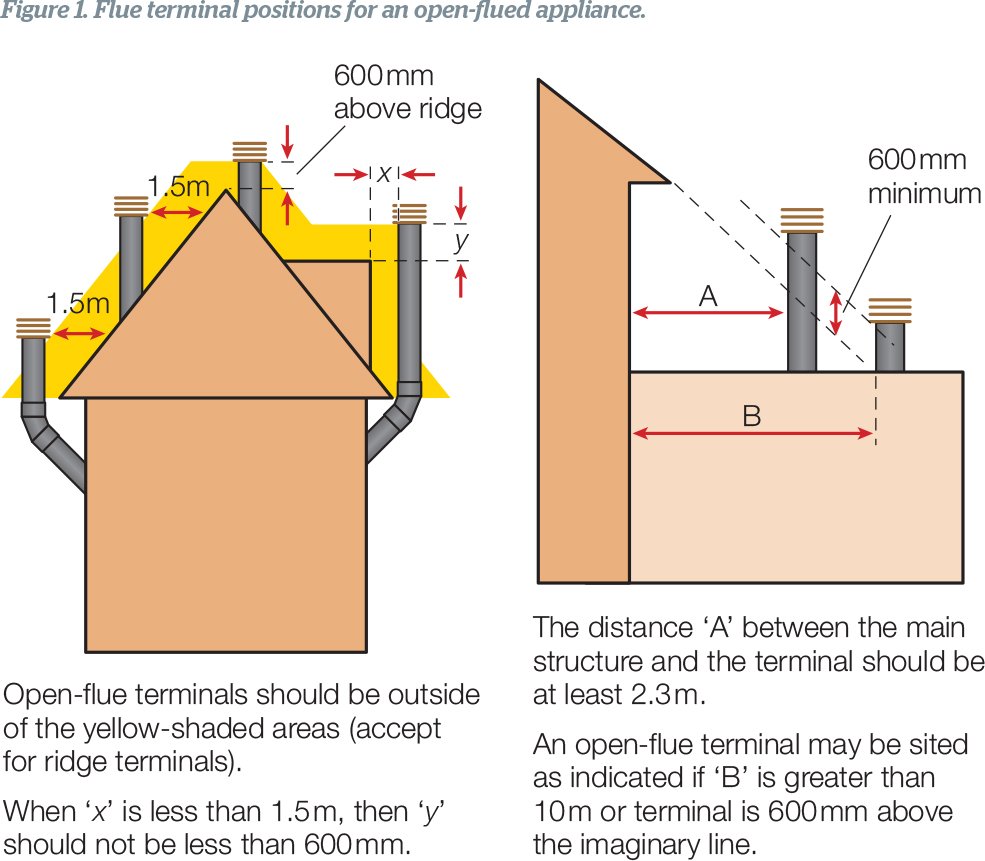
HSE guidance warns that refurbishment work can disrupt existing gas flues or ventilation systems, while inadequately installed gas appliances can create carbon monoxide risks. The impact of refurbishment on existing gas-fired systems should therefore be considered during the planning stage.

Gas appliances require an adequate supply of air and an effective flue to remove combustion products, including carbon monoxide. If a flue is obstructed, incorrectly positioned or otherwise compromised, dangerous levels of carbon monoxide can potentially accumulate.

Carbon monoxide is particularly hazardous because it is colourless, odourless and tasteless and can kill without warning.

Any work involving gas appliances or gas pipework should therefore be properly assessed and, where gas work is required, undertaken by a suitably competent Gas Safe registered engineer.

What does the law require from building contractors?

The CDM 2015 framework places clear responsibilities on contractors.

Where a contractor is the only contractor working on a project for a domestic client, that contractor must ensure a construction phase plan is prepared before setting up the site. They also take on the domestic client’s CDM duties.

Where several contractors are involved, the principal contractor has responsibility for planning, managing, monitoring and coordinating the construction phase.

This is not simply an administrative exercise.

The construction phase plan should reflect the actual work being undertaken and the hazards associated with it. It should be reviewed and revised where circumstances change.

That means asking practical questions before work begins:

What services are present?

Are there gas, electricity, water, drainage or other services that could be affected by the work?

Could the structure become unstable?

Will walls, floors, roofs or other structural elements be altered, removed or temporarily unsupported?

Who is competent to undertake specialist work?

Are suitable structural engineers, temporary works designers, Gas Safe registered engineers or other competent persons required?

How will residents and members of the public be protected?

Domestic projects often take place immediately adjacent to occupied homes, neighbouring properties, pavements and roads.

What happens if the work changes?

The original plan may no longer be adequate if the construction sequence, design or site conditions change.

These are the types of questions that should form part of a meaningful construction phase plan rather than a document produced simply to satisfy a paperwork requirement.

The consequences of ignoring health and safety warnings

The company was subject to an HSE Improvement Notice requiring it to establish a system for producing written construction phase plans where it was acting as principal contractor.

The company subsequently failed to comply with the Improvement Notice.

Mr Azhar also failed to provide relevant information requested by the HSE Lead Inspector during the investigation.

Adam’s Building Construction Ltd pleaded guilty to breaches of Section 3(1) and Section 33(1)(g) of the Health and Safety at Work etc. Act 1974.

At Leeds Magistrates’ Court on 7 August 2026, the company was fined £10,000 and ordered to pay £4,263 in costs.

Mohammed Adam Azhar pleaded guilty to breaches of Section 37(1) and Section 33(1)(e) of the Act. He was fined £1,000 and ordered to pay a £400 victim surcharge.

The HSE Inspector’s comments following the prosecution are particularly relevant for anyone responsible for domestic construction projects: proper planning and arrangements for relocating gas pipework and appliances could have prevented risks which had the potential to result in fatal consequences.

What can construction companies learn from this HSE prosecution?

There are several practical lessons that contractors and construction companies should take from the case.

1. Plan before work starts

The construction phase plan should be prepared before the construction phase begins.

It should identify the significant risks associated with the specific project and establish how those risks will be controlled.

2. Identify existing services

Before altering an existing building, contractors need reliable information about the services within and around the structure.

Gas, electricity and other services should be identified and considered before construction starts.

3. Do not ignore warnings

If Building Control, designers, engineers or other competent people identify a safety concern, it needs to be addressed.

Continuing with work despite repeated warnings can significantly increase both the risk and the potential consequences.

4. Use competent people

Some construction activities require specialist knowledge and competence.

Gas work is an obvious example, but the same principle applies to structural alterations, temporary works, asbestos and other higher-risk activities.

5. Protect people beyond the workforce

CDM 2015 is not solely about protecting construction workers.

Construction activities can affect homeowners, tenants, neighbours, visitors and members of the public. HSE guidance specifically highlights the need to consider everyone who may be affected by construction work.

6. Treat the construction phase plan as a live document

A plan prepared at the beginning of a project is of little value if it no longer reflects what is actually happening on site.

Changes in design, sequencing, contractors, site conditions or discovered services should trigger a review of the relevant risk controls.

A reminder for contractors working on domestic projects

The Bradford prosecution is a useful example of why health and safety management cannot be separated from construction planning.

An extension may be a relatively small project, but the risks can be significant. Existing gas services, structural stability, temporary works and the presence of residents all need to be considered before work begins.

Good health and safety management does not necessarily mean producing excessive amounts of paperwork. It means identifying the hazards, deciding how they will be controlled, communicating those arrangements and ensuring that the controls are actually implemented.

The HSE’s guidance on planning construction work makes clear that the construction phase plan should set out the arrangements, site rules and specific measures needed to control the risks associated with the project.

For contractors, the message from this prosecution is therefore straightforward:

Plan the work. Identify the risks. Use competent people. Listen to competent advice. And make sure the construction phase plan reflects what is actually happening on site.

At Outsource Safety, we support construction companies and contractors with practical health and safety management, including CDM 2015 support, construction phase plans and competent person services.

If you are responsible for construction work and are unsure whether your current arrangements are suitable, getting competent health and safety advice before work starts can be considerably easier—and considerably cheaper—than dealing with the consequences after something goes wrong.

Sources and further guidance

  • HSE – Building company and director fined after botched extension put family’s lives at risk (17 August 2026).
  • HSE – Planning for construction work.
  • HSE – Construction Phase Plan (CDM 2015), CIS80.
  • HSE – Domestic clients: roles and responsibilities.
  • HSE – Structural stability during alteration, demolition and dismantling.
  • HSE – Construction hazardous substances: Carbon monoxide.
Posted by Roger Hart

Cement Company Fined £1 Million After Preventable Machinery Fatality: What Every Employer Can Learn

A tragic workplace fatality has resulted in a £1 million fine for a Gloucestershire cement manufacturer after an employee was crushed by a 1.6-tonne concrete counterweight inside a cement bagging plant.

While every prosecution highlights the devastating consequences of poor health and safety management, this latest case serves as a particularly stark reminder that machine guarding is not optional. Removing safety barriers—even temporarily or for convenience—can have catastrophic consequences.

For organisations operating manufacturing plants, warehouses, production facilities, recycling centres or any workplace with automated machinery, the lessons from this prosecution are impossible to ignore.


What Happened?

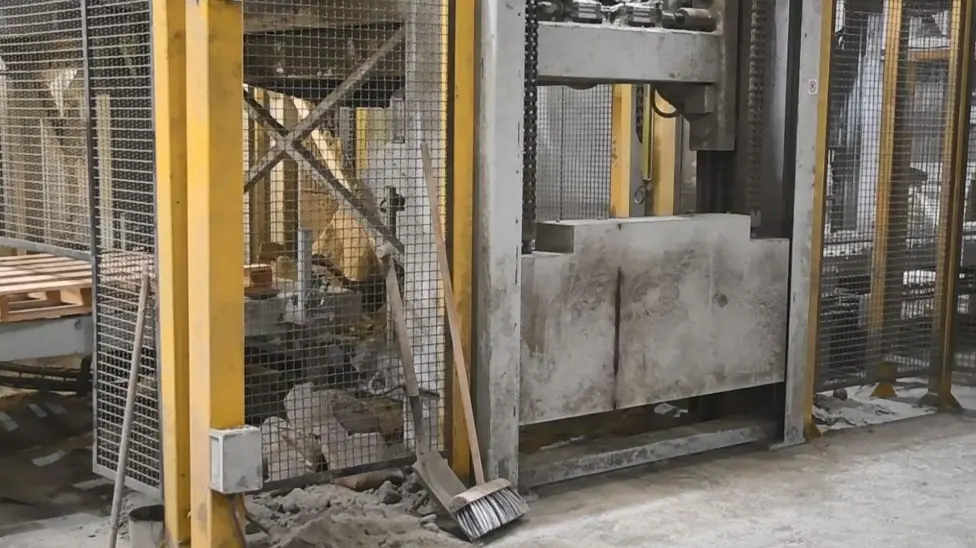
On 4 August 2021, Martin Bennett, aged 35, was working at Dragon Alfa Cement Limited’s bagging facility in Sharpness, Gloucestershire, when he became trapped beneath a 1.6-tonne concrete weight used within the pallet handling system.


Image credit: HSE

Following an investigation, the Health and Safety Executive (HSE) found that a substantial section of the machine’s perimeter guarding had been routinely removed over a prolonged period, leaving employees with unrestricted access to dangerous moving parts.

The investigation concluded that the company had failed to prevent access to dangerous machinery, despite suitable safeguarding measures being readily available.

Dragon Alfa Cement Limited pleaded guilty to breaching Section 2(1) of the Health and Safety at Work etc. Act 1974 and was fined £1 million, together with costs of £9,621, at Bristol Magistrates’ Court on 21 July 2026.


The Human Cost Behind Every Prosecution

Health and safety prosecutions often focus on legislation and financial penalties, but behind every case is a family whose lives have been permanently changed.

Martin’s wife described him as:

“Kind right down to the very bones of him.”

His daughters also spoke of the lasting trauma caused by losing their father, illustrating that workplace accidents don’t simply affect employees—they have lifelong consequences for families, friends and colleagues.


Where Did Things Go Wrong?

According to the HSE investigation, the principal failures were surprisingly straightforward:

  • Machine guarding had been removed and not reinstated.
  • Employees could freely access hazardous moving machinery.
  • The company failed to maintain effective engineering controls.
  • Existing safeguards were ignored rather than maintained.
  • Risks associated with dangerous machinery were not adequately controlled.

These failures represent a breakdown of some of the most fundamental principles of machinery safety.


Why Machine Guarding Matters

Machine guards exist to remove the opportunity for human error.

Even experienced workers can become distracted, rushed or complacent during repetitive tasks. Engineering controls such as fixed guards and interlocked barriers provide protection when human behaviour alone cannot.

The HSE continues to emphasise that fixed guards should always be the first choice wherever reasonably practicable because they physically prevent access to dangerous parts of machinery.


Understanding Your Legal Duties Under PUWER

While this prosecution centred on the Health and Safety at Work etc. Act, it also reinforces the wider duties imposed by the Provision and Use of Work Equipment Regulations 1998 (PUWER).

PUWER requires employers to ensure that:

  • Work equipment is suitable for its intended use.
  • Dangerous moving parts are effectively guarded.
  • Equipment is inspected and maintained.
  • Employees receive suitable information, instruction and training.
  • Risks are reduced so far as reasonably practicable.

One of the most common findings in HSE prosecutions is that safeguards which were originally installed have later been removed to speed up production or simplify maintenance.

This practice creates unacceptable levels of risk and almost always attracts regulatory enforcement following an incident.


A Pattern Seen Across Manufacturing

Unfortunately, this is far from an isolated case.

Recent HSE prosecutions continue to demonstrate recurring themes across UK manufacturing and heavy industry, including:

  • inadequate machine guarding;
  • unsafe lifting operations;
  • failures in workplace transport management;
  • insufficient supervision;
  • poor maintenance of safety-critical equipment; and
  • inadequate risk assessments.

For example, in 2025 another concrete products manufacturer was prosecuted after an 800kg steel pallet crushed a worker’s legs because safe systems of work had not been implemented.

Although each incident differs, the underlying causes remain remarkably consistent:

  • known hazards;
  • missing controls;
  • poor management oversight; and
  • failures to maintain safe systems of work.

Five Questions Every Employer Should Ask

Following this prosecution, employers should consider whether they can confidently answer the following:

  1. Are all machine guards currently fitted and fully effective?
  2. Could employees access moving machinery by bypassing barriers?
  3. Are guarding inspections formally recorded?
  4. Have machinery risk assessments been reviewed following operational changes?
  5. Would temporary removal of guarding immediately stop production until it is safely reinstated?

If the answer to any of these questions is “no” or “I’m not sure”, it may be time to review your machinery safety arrangements.


Beyond Compliance: Building a Positive Safety Culture

Good organisations don’t simply comply with legislation—they create environments where safety concerns are raised before incidents occur.

Employees should feel empowered to report:

  • damaged guards;
  • missing interlocks;
  • unsafe shortcuts;
  • production pressures that compromise safety; and
  • defects in machinery.

A positive reporting culture can prevent minor issues developing into life-changing incidents.


Final Thoughts

The £1 million fine imposed on Dragon Alfa Cement Limited reflects the seriousness of the failings identified by the HSE, but no financial penalty can compensate for the loss suffered by Martin Bennett’s family.

This case demonstrates once again that machinery accidents are rarely unpredictable. In most cases, they are entirely preventable through effective risk management, robust machine guarding and strong leadership.

For employers, the message is clear: if machinery guarding has been removed, bypassed or neglected, the time to act is now—not after an HSE investigation.

Posted by Roger Hart

Face Fit Testing Explained: Why It Matters, When It’s Required and How to Stay Compliant

Face Fit TestingFace Fit Testing Explained: Everything Employers Need to Know

When employees rely on Respiratory Protective Equipment (RPE), simply issuing a mask isn’t enough.  If the respirator doesn’t fit the wearer correctly, contaminated air can bypass the filter and enter the breathing zone, significantly reducing the level of protection. In many industries, this can expose workers to hazardous dusts, fumes, vapours, fibres and biological agents that may cause long-term occupational illness.

That’s why face fit testing is an essential part of any effective respiratory protection programme.  The Health and Safety Executive (HSE) makes it clear that tight-fitting respiratory protective equipment should be face fit tested before use to ensure it provides adequate protection for the individual wearer. This isn’t simply good practice—it forms part of an employer’s legal duties under the Control of Substances Hazardous to Health (COSHH) Regulations.

What is Face Fit Testing?

Face fit testing is a process used to confirm that a tight-fitting respirator forms an effective seal against an individual’s face.  Because everyone’s facial features are different, a mask that fits one employee perfectly may provide inadequate protection for another.  A successful face fit test demonstrates that a specific make, model and size of respirator is suitable for that individual.  It’s important to understand that a face fit test is not a one-size-fits-all approval. The test only applies to the exact mask that has been tested.

If an employee changes to a different manufacturer, model or size of respirator, another face fit test will normally be required.

Why is Face Fit Testing So Important?

Respiratory hazards are responsible for thousands of cases of work-related ill health every year.

Exposure to substances such as:

  • Silica dust
  • Wood dust
  • Welding fumes
  • Asbestos fibres
  • Flour dust
  • Metal fumes
  • Chemical vapours
  • Isocyanates

can lead to serious conditions including occupational asthma, chronic obstructive pulmonary disease (COPD), silicosis and occupational cancers.  Where engineering controls cannot eliminate exposure, suitable RPE becomes the final line of defence.  However, that protection is only effective if the respirator seals correctly against the wearer’s face. Even small gaps can dramatically reduce the protection factor of the mask.

Is Face Fit Testing a Legal Requirement?

In most circumstances, yes.  Under COSHH, employers have a duty to ensure that respiratory protective equipment is both:

  • Adequate for the hazard.
  • Suitable for the individual wearer.

Demonstrating suitability for tight-fitting facepieces requires face fit testing.  Failure to ensure suitable RPE may leave employers vulnerable to enforcement action and could place employees at unnecessary risk of exposure to hazardous substances.

Which Masks Require Face Fit Testing?

Face fit testing applies to all tight-fitting respiratory protective equipment, including:

  • FFP2 disposable respirators
  • FFP3 disposable respirators
  • Reusable half-mask respirators
  • Full-face respirators
  • Tight-fitting powered respirators

Loose-fitting powered hoods and helmets typically do not require face fit testing because they do not rely on a facial seal to provide protection.

When Should Face Fit Testing Be Carried Out?

The ideal time to carry out face fit testing is during the selection process before employees begin using respiratory protection.

Testing should also be repeated if:

  • A different make or model of respirator is introduced.
  • The wearer changes mask size.
  • Significant weight gain or weight loss occurs.
  • Facial surgery changes facial features.
  • Major dental work affects the facial profile.
  • The employee can no longer achieve a satisfactory seal.

Many organisations also choose to review face fit testing as part of wider health surveillance or RPE management programmes.

Facial Hair and Face Fit Testing

One of the most common reasons for failed face fit tests is facial hair. Even light stubble can prevent a respirator from achieving an effective seal. For employees required to wear tight-fitting masks, the sealing area must be clean shaven. Where workers maintain facial hair for religious, cultural or medical reasons, employers should consider alternative respiratory protection such as loose-fitting powered respirators that do not depend on a facial seal.

Qualitative vs Quantitative Face Fit Testing

There are two recognised methods of face fit testing.

Qualitative Testing

This method relies on the wearer detecting a test solution by taste or smell while carrying out a series of movements and breathing exercises.  It is commonly used for disposable FFP2 and FFP3 respirators.

Quantitative Testing

This uses specialist equipment to measure leakage into the respirator and produces a numerical fit factor.  Quantitative testing is typically used for reusable half masks, full-face masks and higher protection applications, although it can also be used on disposable respirators.

Common Reasons Employees Fail a Face Fit Test

Failure does not necessarily indicate a problem with the employee—it often highlights that a different respirator is required.

Common reasons include:

  • Incorrect mask size.
  • Poor mask design for the wearer’s facial features.
  • Incorrect fitting technique.
  • Facial hair.
  • Damaged or worn respirators.
  • Incorrect strap adjustment.

Testing helps identify the most suitable equipment before exposure to hazardous substances occurs.

Face Fit Testing Is Not the Same as a Fit Check

A common misconception is that carrying out a user seal check each day replaces face fit testing.

It does not.

A face fit test is a formal assessment undertaken by a competent person to determine whether a respirator is suitable for an individual.

A fit check is the quick seal check carried out by the wearer every time the respirator is put on.

Both are important—and both should form part of an effective respiratory protection programme.

Who Can Carry Out Face Fit Testing?

The HSE states that face fit testing should only be undertaken by someone who is competent, appropriately trained and experienced.

Many organisations choose testers accredited through the Fit2Fit scheme as evidence of competence and consistency.

Best Practice for Employers

Face fit testing should never be viewed as a one-off exercise.

An effective RPE programme should also include:

  • COSHH risk assessments.
  • Appropriate selection of respiratory protective equipment.
  • User training.
  • Daily fit checks.
  • Cleaning and maintenance.
  • Storage procedures.
  • Inspection and replacement schedules.
  • Refresher training where required.

Taking this holistic approach helps ensure RPE continues to provide the protection employees rely on.

Frequently Asked Questions

Does every employee need their own face fit test?

Yes. Face shape varies considerably between individuals, so each person must be tested separately.

Does passing one face fit test mean all masks will fit?

No. The result only applies to the specific make, model and size tested.

Do disposable FFP3 masks require face fit testing?

Yes, if they are tight-fitting respirators being used to control exposure to hazardous substances.

How often should face fit testing be repeated?

There is no fixed expiry period. Retesting is required whenever the respirator changes or the wearer’s facial characteristics change sufficiently to affect the fit.

How Outsource Safety Can Help

Managing respiratory protection is about far more than supplying masks. Employers must ensure their respiratory protection programme meets legal requirements, protects employees and withstands regulatory scrutiny.

At Outsource Safety, we help organisations develop practical, proportionate health and safety solutions, including COSHH compliance, risk assessments, RPE management and competent face fit testing support.

If you’re unsure whether your organisation is meeting its legal responsibilities, our experienced consultants can help you review your current arrangements and identify any areas for improvement.


Key Takeaways

Face fit testing is an essential element of respiratory protection and a legal requirement whenever tight-fitting RPE is relied upon to control exposure to hazardous substances.

By selecting suitable equipment, using competent testers, training employees correctly and maintaining an effective RPE programme, employers can significantly reduce the risk of occupational respiratory disease while demonstrating compliance with UK health and safety legislation.

Posted by Roger Hart

HSE Fatal Injury Statistics 2025/26: Progress Worth Celebrating – But No Room for Complacency

The Health and Safety Executive (HSE) has published its latest Work-related Fatal Injuries in Great Britain statistics, revealing that 126 workers lost their lives in workplace accidents during 2025/26.

While this represents one of the lowest annual totals on record outside the pandemic years, every fatality represents a person who never returned home from work. Behind every statistic is a family, colleagues and a community affected by an entirely preventable tragedy.

The figures provide encouraging evidence that workplace safety standards continue to improve across Great Britain. However, they also highlight persistent risks that employers must continue to address through effective health and safety management.

Key findings from the latest HSE statistics: 2025/26 HSE Fatal Injury Headlines

Statistic2025/26
Worker fatalities126
Members of the public killed in work-related incidents104
Great Britain’s long-term trend↓ Continuing downward
HSE statusProvisional statistics

Source: HSE Work-related Fatal Injuries in Great Britain 2025/26.

Although these figures represent significant progress compared with previous decades—when annual workplace fatalities regularly exceeded 400—the pace of improvement has slowed in recent years. This suggests that further reductions will require organisations to focus on the quality of their safety culture rather than relying solely on compliance.

Which industries remain at greatest risk?

Some sectors continue to experience disproportionately high numbers of fatal injuries.

Worker Fatalities by Industry

IndustryFatalities
Construction25
Agriculture, Forestry & Fishing22
Manufacturing18
Transportation & Storage15
Wholesale, Retail, Motor Repair, Accommodation & Food11
Waste & Recycling6
Other Industries29
Total126

Construction remains the sector with the highest number of fatalities, while Agriculture continues to record the highest fatal injury rate per 100,000 workers.

Construction continues to record the highest number of fatalities, although the sector has seen a welcome reduction compared with previous years. Agriculture, however, continues to experience the highest fatal injury rate per 100,000 workers, underlining the importance of robust risk management in higher-risk industries.

Falls from height remain the leading killer

Despite ongoing awareness campaigns and improvements in equipment, falls from height remain the leading cause of workplace deaths.

Leading Causes of Fatal Workplace Accidents

Accident TypeFatalities
Falls from height31
Struck by moving vehicle24
Struck by moving object21
Trapped by collapsing/overturning object18
Contact with moving machinery10
Other accident types22
Total126

This table reinforces one of the article’s key messages—that familiar risks continue to account for the majority of workplace deaths.

Many of these incidents are entirely foreseeable and, more importantly, preventable.

Simple controls such as proper planning, competent supervision, suitable access equipment, effective vehicle segregation and regular maintenance continue to offer some of the greatest opportunities to reduce fatal risk.

Older workers continue to be disproportionately affected

One notable finding is the age profile of those involved in fatal accidents.

Workers aged 60 and over accounted for approximately one-third of all workplace fatalities, despite representing a much smaller proportion of the overall workforce.

As the UK’s workforce continues to age, employers should consider whether existing risk assessments adequately account for factors such as mobility, fatigue, physical capability and health conditions, particularly in physically demanding roles.

Statistics should drive action—not complacency

Although Great Britain remains one of the safest places in the world to work, these figures should never be viewed as a reason to relax health and safety standards.

Why Employers Should Pay Attention

Key FindingWhy it Matters
Falls from height remain the leading causePrioritise work at height planning, equipment and supervision
Construction records the most fatalitiesContinue strong site management and contractor controls
Agriculture has the highest fatality rateReview lone working, machinery and vehicle risks
Older workers remain over-representedConsider age when reviewing risk assessments
Britain remains among the safest countries to workContinue improving safety culture—not just legal compliance

These are not emerging risks—they are well understood. The challenge lies in ensuring that suitable controls are consistently implemented, monitored and reviewed.

A strong safety management system is about more than meeting legal requirements. It creates safer workplaces, reduces disruption, protects reputation and demonstrates a genuine commitment to employees’ wellbeing.

What employers should review now

The publication of the HSE’s annual statistics provides an ideal opportunity for organisations to review their own health and safety performance.

Employer Health & Safety Checklist

✔ Review AreaCompleted?
Risk assessments reviewed in last 12 months
Working at Height controls audited
Workplace transport risks reviewed
Employee training refreshed
Near misses investigated
Contractors assessed and monitored
Directors reviewing H&S performance

Often, a proactive review identifies opportunities for improvement long before an incident occurs.

How Outsource Safety can help

At Outsource Safety, we work with organisations across a wide range of industries to develop practical, proportionate health and safety management systems that support both compliance and operational performance.

Whether you require competent health and safety advice, risk assessments, policy development, audits, inspections or ongoing retained consultancy support, our aim is simple: helping businesses prevent incidents before they happen.

The latest HSE statistics remind us that while workplace safety has improved dramatically over recent decades, there is still work to do. Every employer has a role to play in ensuring that everyone goes home safely at the end of every working day.

If you would like to review your current arrangements or discuss how we can support your organisation, please get in touch with the Outsource Safety team.

Posted by Roger Hart

Hot weather and work; how hot is too hot and what can you do?

Hot Weather at Work: Employer Responsibilities During Heatwaves and HSE Guidance for 2026

As temperatures continue to rise across the UK, employers are being reminded of their legal responsibilities to protect workers from the risks associated with hot weather and workplace heat stress.  If you have questions and are (or want to be) a Safety~net Competent Person Scheme member, please contact us for further information and guidance.

The Health and Safety Executive (HSE) has recently updated its guidance for employers, highlighting the importance of managing workplace temperatures and taking practical steps to prevent heat-related illness during periods of extreme weather.

While UK law does not set a maximum workplace temperature, employers still have a duty of care to ensure working conditions are safe, healthy and do not place employees at risk.

What Are an Employer’s Responsibilities During Hot Weather?

Many employers are surprised to learn that there is no legal maximum temperature for workplaces in the UK.

However, under health and safety legislation, employers must assess workplace risks and implement suitable control measures where high temperatures could affect employee health, safety or wellbeing.

This applies to:

  • Offices
  • Warehouses
  • Manufacturing facilities
  • Construction sites
  • Outdoor workplaces
  • Agricultural environments
  • Logistics and transport operations

As part of their workplace risk assessment, employers should identify situations where excessive heat could lead to illness, fatigue, reduced concentration or increased accident rates.

What Is Heat Stress at Work?

Heat stress occurs when the body’s natural cooling mechanisms are unable to maintain a safe internal temperature.

When employees become too hot, they can develop heat-related illnesses ranging from mild discomfort through to serious medical emergencies such as heat exhaustion and heat stroke.

Common Signs of Heat Stress

Employees and supervisors should be aware of symptoms including:

  • Excessive sweating
  • Dizziness
  • Headaches
  • Muscle cramps
  • Fatigue
  • Nausea
  • Reduced concentration
  • Confusion
  • Rapid heartbeat

Recognising these symptoms early can help prevent more serious health consequences.

Why Heat Stress Is Becoming a Growing Workplace Safety Issue

Heatwaves are becoming more frequent and intense across the UK.

According to climate projections, extreme weather events are expected to increase in both frequency and severity over the coming decades. This means workplace heat exposure is no longer an occasional summer concern but an emerging long-term occupational health and safety challenge.

High temperatures can:

  • Reduce productivity
  • Increase worker fatigue
  • Impair decision-making
  • Increase accident rates
  • Contribute to dehydration
  • Exacerbate existing medical conditions

For employers, failing to manage these risks can result in increased sickness absence, reduced operational performance and potential enforcement action where risks have not been adequately controlled.

Which Workers Are Most at Risk During a Heatwave?

Certain employees are particularly vulnerable to hot weather conditions.

Higher-risk groups include:

  • Outdoor workers
  • Construction workers
  • Road and rail maintenance teams
  • Agricultural workers
  • Manufacturing employees
  • Warehouse operatives
  • Workers wearing PPE
  • Pregnant employees
  • Older workers
  • Employees with underlying health conditions
  • New starters who have not yet acclimatised

Risk assessments should specifically consider these groups and any additional controls required.

HSE Guidance: How Employers Can Reduce Heat Stress Risks

The HSE recommends a range of practical measures to help employers manage workplace temperatures and protect their workforce during hot weather.

1. Review Work Schedules

Where possible:

  • Move physically demanding tasks to cooler parts of the day
  • Avoid unnecessary manual handling during peak temperatures
  • Introduce task rotation
  • Consider flexible working hours

2. Provide Access to Drinking Water

Dehydration significantly increases the risk of heat stress.

Employers should ensure:

  • Cool drinking water is readily available
  • Workers are encouraged to drink regularly
  • Remote workers have suitable hydration arrangements

3. Improve Ventilation and Airflow

For indoor workplaces, employers should consider:

  • Increasing natural ventilation
  • Opening windows and doors where safe
  • Using fans appropriately
  • Improving air circulation
  • Introducing cooling systems where necessary

4. Increase Rest Breaks

Additional rest periods can help workers recover from heat exposure.

Employers should provide:

  • More frequent breaks
  • Cool recovery areas
  • Shaded outdoor rest locations

5. Review Personal Protective Equipment (PPE)

PPE can increase heat stress by limiting the body’s ability to cool itself.

Employers should:

  • Review whether alternative PPE options are available
  • Monitor workers undertaking strenuous tasks
  • Ensure regular breaks are provided

6. Train Employees to Recognise Heat-Related Illness

Workers should understand:

  • Signs and symptoms of heat stress
  • Emergency procedures
  • Reporting requirements
  • The importance of hydration and rest

Outdoor Working in Hot Weather

Outdoor workers face additional risks due to direct sun exposure and prolonged periods in high temperatures.

Employers should consider:

  • Providing shaded work areas
  • Adjusting work schedules
  • Monitoring weather forecasts
  • Providing sun protection measures
  • Increasing supervision during heatwaves

Planning ahead can significantly reduce the likelihood of heat-related illness and lost working time.

Is There a Legal Maximum Workplace Temperature in the UK?

This remains one of the most frequently asked workplace health and safety questions.

Currently, there is no legal maximum workplace temperature in UK legislation.

However, employers are still required to ensure workplace temperatures are reasonable and do not create health and safety risks.

Trade unions and occupational health organisations continue to campaign for a maximum legal workplace temperature, particularly as climate change increases the frequency of extreme heat events.

Until any legislative changes are introduced, employers must rely on robust risk assessments and proportionate control measures to demonstrate compliance.

Heatwave Workplace Safety: Key Actions for Employers

As temperatures continue to rise, employers should take a proactive approach to managing heat-related risks.

Key actions include:

✓ Reviewing workplace risk assessments

✓ Identifying vulnerable workers

✓ Providing access to water and rest facilities

✓ Improving ventilation and cooling

✓ Adjusting work schedules where necessary

✓ Training staff to recognise heat stress symptoms

By implementing these measures, organisations can improve employee wellbeing, maintain productivity and demonstrate compliance with their health and safety obligations.

Need Help Reviewing Your Workplace Risk Assessments?

Heat stress is increasingly becoming a significant workplace health and safety issue across the UK.

If your organisation has not reviewed its hot weather arrangements recently, now is an ideal opportunity to assess existing controls and ensure employees remain protected during periods of extreme heat.

A proactive approach today can help prevent incidents, reduce sickness absence and support legal compliance throughout the summer months.

Posted by Roger Hart

What is an LEV (Local Exhaust Ventilation) Commissioning report?

When you have LEV installed, you must then have a report from the installer which summarises how the installation has met successfully with the design criteria set for the LEV.  Both of these tasks are always carried out by competent engineers experienced in the design and validation of LEV, often a qualification issued by BOHS (British Occupational Hygiene Society). If you’re wondering what one might look like CIBSE have an example document on their website: Link

It’s helpful to draw an analogy here with other more common reports, such as a handover certificate when you have electrical or gas work completed by a competent engineer.  Read our succinct and helpful summary on what a LEV commissioning report should contain below, and if you have questions and are (or want to be) a Safety~net Competent Person Scheme member, please contact us for further information and guidance.LEV commissioning report

An LEV (Local Exhaust Ventilation) commissioning report is a formal, documented record that proves a newly installed or significantly modified LEV system is operating exactly as it was designed to, and that it provides the necessary protection for employees from hazardous substances in the air.

In the UK, under the COSHH (Control of Substances Hazardous to Health) Regulations, employers have a legal duty to ensure that any control measure (like an LEV system) is maintained in an efficient state and in good working order. Commissioning is the critical “first step” in this process.

What is the Purpose of the Report?

The report serves as the “Baseline” for the system. Once a system is commissioned, all future routine examinations and tests (TExT) will be compared against these initial results to ensure the system hasn’t degraded over time.

It confirms three main criteria:

  1. Design Compliance: Does the system achieve the required airflow, velocity, and pressure identified in the original design specification?
  2. Safety Performance: Is it effectively capturing, conveying, and removing hazardous substances (fumes, dust, vapours) from the worker’s breathing zone?
  3. Instruction & Training: Does the system have clear documentation, and are the operators trained on how to use it correctly?

Key Components of an LEV Commissioning Report

A professional commissioning report should include:

  • System Description: Details of the layout, ductwork, fan, and filtration units.
  • Design Specifications: A summary of the design intent (e.g., the target capture velocity or required volume flow rate).
  • Measurement Data:
    • Flow Rates: Air volume measurements at the hood and throughout the ductwork.
    • Pressure Readings: Static pressure measurements across the system.
    • Face Velocities: The speed of air moving into the hood (crucial for capture).
  • Visual Evidence: Photographs of the installation and any testing points (e.g., test ports in ducts).
  • System Integrity: Checks for leaks in ductwork or blockages in the filtration unit.
  • Verification of Performance: Results from smoke tests or tracer gas tests to visualize airflow and confirm it is actually capturing the contaminants.
  • User Instructions: Confirmation that a logbook is in place and that users understand how to use the system (e.g., not blocking hoods).

Why is this Report Critical?

  • Legal Compliance: Without a commissioning report, you technically do not have a record that the system was ever “fit for purpose” when it was installed.
  • Insurance & Liability: In the event of a workplace health issue (such as respiratory problems related to dust or fumes), this report is your primary evidence that the company took adequate steps to control exposure.
  • Maintenance Benchmark: You cannot effectively perform routine maintenance if you do not know the “correct” performance numbers established at commissioning.

A Note on Competence

The person conducting the commissioning must be competent. They should have the necessary skills, knowledge, and experience—often evidenced by relevant qualifications (such as those from the British Occupational Hygiene Society – BOHS) or through professional engineering bodies—to perform the measurements accurately and interpret the results correctly.

Posted by Roger Hart