HSE Prosecution: Building Company Fined After Unsafe Extension Put Family at Risk
A recent Health and Safety Executive (HSE) prosecution has highlighted the potentially devastating consequences of poor planning and inadequate health and safety management during domestic building work.
Adam’s Building Construction Ltd, a Yorkshire-based building company, and its director have been fined after a home extension was constructed over existing gas pipework and a boiler flue without the necessary arrangements being made to relocate them.
The case is a timely reminder that domestic building projects still require proper health and safety planning, and that a relatively routine extension can create serious risks to workers, residents and other people affected by the work.
What happened?
Adam’s Building Construction Ltd was contracted to build an extension to the rear of a property in Bradford. Work began in January 2024.
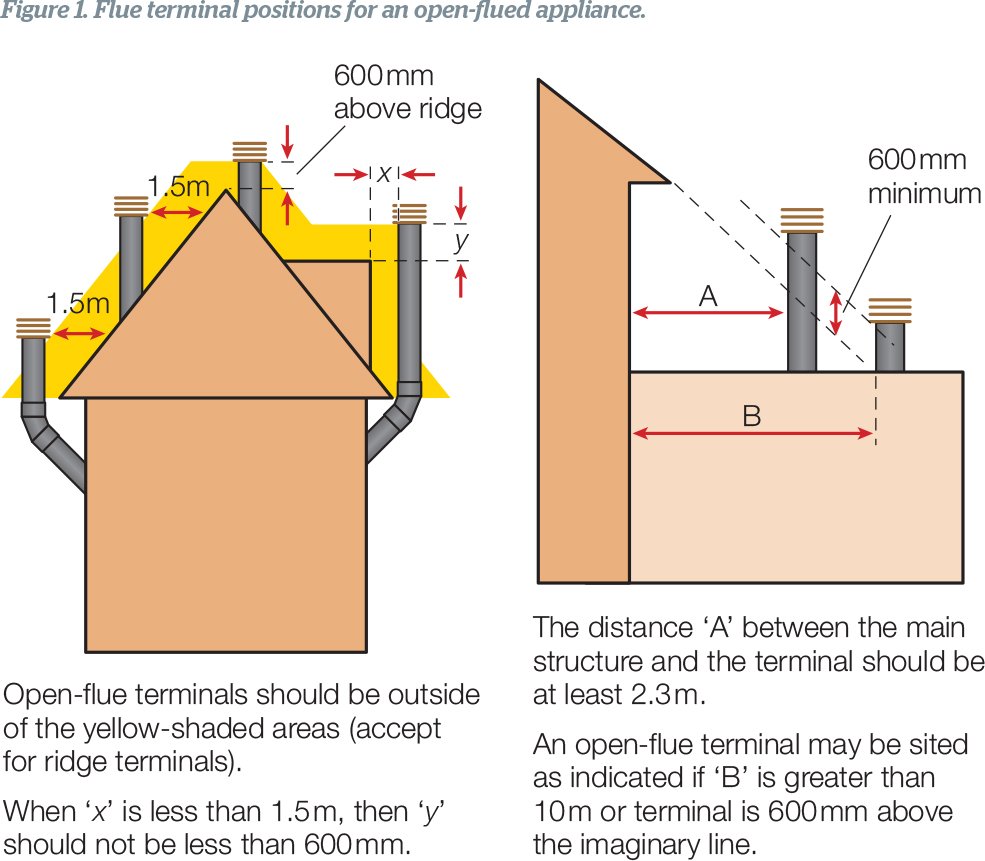
However, the extension was constructed over existing gas service pipework, while the flue serving the property’s gas boiler was not repositioned.
The problem was discovered on 22 May 2024 when a Building Control Inspector from City of Bradford Metropolitan District Council attended the property. The inspector identified that the boiler flue was terminating inside the newly constructed extension.
Northern Gas Networks subsequently attended and identified the gas installation as immediately dangerous. The boiler was still operating and the flue was discharging combustion products into the extension.
The gas supply had to be disconnected, leaving the family without gas for several weeks. The remedial work reportedly cost approximately £4,000.
The consequences could have been far more serious. The defective arrangement exposed the homeowner and her two children to the potential risks of gas leaks, fire, explosion and carbon monoxide poisoning.
Perhaps most concerningly, the HSE investigation found that Building Control Inspectors had warned the company several times during the works that the gas pipework and flue needed to be properly relocated.
The importance of a construction phase plan
The prosecution was not simply about the defective gas installation.
The HSE also found that the company’s sole director, Mohammed Adam Azhar, could not demonstrate that the business had prepared construction phase plans for its building work.
This is particularly important because the projects undertaken by the company were exclusively for domestic clients.
Under the Construction (Design and Management) Regulations 2015 (CDM 2015), a construction phase plan is required before construction work begins. For a project involving a single contractor, responsibility for preparing the plan rests with that contractor. Where there is more than one contractor, the principal contractor has this responsibility.
A construction phase plan does not need to be an unnecessarily complicated document. HSE guidance describes it as a practical way of setting out the health and safety arrangements, site rules and controls required for the particular project.
The HSE’s CIS80 guidance specifically identifies hazards such as:
- falls from height;
- collapse of structures;
- exposure to asbestos;
- electricity and other services;
- risks to clients, members of the public and others; and
- activities requiring supervision.
For domestic construction work, these issues remain just as important as they are on larger commercial projects.
Domestic work does not mean “low risk”
One of the lessons from this prosecution is that domestic construction should not be treated as informal construction.
A home extension may look straightforward, but the work can involve structural alterations, excavation, temporary works, electrical installations, gas services, work at height, asbestos, dust and interaction with members of the public.
HSE guidance on structural alterations makes clear that construction work which could affect the stability of a structure must be properly planned and carried out by competent people. A competent person should undertake an appropriate survey and assessment before potentially load-bearing parts of a structure are altered. Where necessary, temporary supports should be properly designed, installed, inspected and maintained.
The HSE’s construction phase plan template makes the same point, specifically identifying collapse of structures as a hazard that may require walls, beams, chimney breasts and roofs to be supported by props installed by a competent person.
Gas services and building work: a critical interface
The Bradford case also demonstrates why existing building services must be identified and considered during the planning stage.
Gas pipework, boilers and flues cannot simply be treated as obstacles to be worked around once construction is underway.
HSE guidance warns that refurbishment work can disrupt existing gas flues or ventilation systems, while inadequately installed gas appliances can create carbon monoxide risks. The impact of refurbishment on existing gas-fired systems should therefore be considered during the planning stage.
Gas appliances require an adequate supply of air and an effective flue to remove combustion products, including carbon monoxide. If a flue is obstructed, incorrectly positioned or otherwise compromised, dangerous levels of carbon monoxide can potentially accumulate.
Carbon monoxide is particularly hazardous because it is colourless, odourless and tasteless and can kill without warning.
Any work involving gas appliances or gas pipework should therefore be properly assessed and, where gas work is required, undertaken by a suitably competent Gas Safe registered engineer.
What does the law require from building contractors?
The CDM 2015 framework places clear responsibilities on contractors.
Where a contractor is the only contractor working on a project for a domestic client, that contractor must ensure a construction phase plan is prepared before setting up the site. They also take on the domestic client’s CDM duties.
Where several contractors are involved, the principal contractor has responsibility for planning, managing, monitoring and coordinating the construction phase.
This is not simply an administrative exercise.
The construction phase plan should reflect the actual work being undertaken and the hazards associated with it. It should be reviewed and revised where circumstances change.
That means asking practical questions before work begins:
What services are present?
Are there gas, electricity, water, drainage or other services that could be affected by the work?
Could the structure become unstable?
Will walls, floors, roofs or other structural elements be altered, removed or temporarily unsupported?
Who is competent to undertake specialist work?
Are suitable structural engineers, temporary works designers, Gas Safe registered engineers or other competent persons required?
How will residents and members of the public be protected?
Domestic projects often take place immediately adjacent to occupied homes, neighbouring properties, pavements and roads.
What happens if the work changes?
The original plan may no longer be adequate if the construction sequence, design or site conditions change.
These are the types of questions that should form part of a meaningful construction phase plan rather than a document produced simply to satisfy a paperwork requirement.
The consequences of ignoring health and safety warnings
The company was subject to an HSE Improvement Notice requiring it to establish a system for producing written construction phase plans where it was acting as principal contractor.
The company subsequently failed to comply with the Improvement Notice.
Mr Azhar also failed to provide relevant information requested by the HSE Lead Inspector during the investigation.
Adam’s Building Construction Ltd pleaded guilty to breaches of Section 3(1) and Section 33(1)(g) of the Health and Safety at Work etc. Act 1974.
At Leeds Magistrates’ Court on 7 August 2026, the company was fined £10,000 and ordered to pay £4,263 in costs.
Mohammed Adam Azhar pleaded guilty to breaches of Section 37(1) and Section 33(1)(e) of the Act. He was fined £1,000 and ordered to pay a £400 victim surcharge.
The HSE Inspector’s comments following the prosecution are particularly relevant for anyone responsible for domestic construction projects: proper planning and arrangements for relocating gas pipework and appliances could have prevented risks which had the potential to result in fatal consequences.
What can construction companies learn from this HSE prosecution?
There are several practical lessons that contractors and construction companies should take from the case.
1. Plan before work starts
The construction phase plan should be prepared before the construction phase begins.
It should identify the significant risks associated with the specific project and establish how those risks will be controlled.
2. Identify existing services
Before altering an existing building, contractors need reliable information about the services within and around the structure.
Gas, electricity and other services should be identified and considered before construction starts.
3. Do not ignore warnings
If Building Control, designers, engineers or other competent people identify a safety concern, it needs to be addressed.
Continuing with work despite repeated warnings can significantly increase both the risk and the potential consequences.
4. Use competent people
Some construction activities require specialist knowledge and competence.
Gas work is an obvious example, but the same principle applies to structural alterations, temporary works, asbestos and other higher-risk activities.
5. Protect people beyond the workforce
CDM 2015 is not solely about protecting construction workers.
Construction activities can affect homeowners, tenants, neighbours, visitors and members of the public. HSE guidance specifically highlights the need to consider everyone who may be affected by construction work.
6. Treat the construction phase plan as a live document
A plan prepared at the beginning of a project is of little value if it no longer reflects what is actually happening on site.
Changes in design, sequencing, contractors, site conditions or discovered services should trigger a review of the relevant risk controls.
A reminder for contractors working on domestic projects
The Bradford prosecution is a useful example of why health and safety management cannot be separated from construction planning.
An extension may be a relatively small project, but the risks can be significant. Existing gas services, structural stability, temporary works and the presence of residents all need to be considered before work begins.
Good health and safety management does not necessarily mean producing excessive amounts of paperwork. It means identifying the hazards, deciding how they will be controlled, communicating those arrangements and ensuring that the controls are actually implemented.
The HSE’s guidance on planning construction work makes clear that the construction phase plan should set out the arrangements, site rules and specific measures needed to control the risks associated with the project.
For contractors, the message from this prosecution is therefore straightforward:
Plan the work. Identify the risks. Use competent people. Listen to competent advice. And make sure the construction phase plan reflects what is actually happening on site.
At Outsource Safety, we support construction companies and contractors with practical health and safety management, including CDM 2015 support, construction phase plans and competent person services.
If you are responsible for construction work and are unsure whether your current arrangements are suitable, getting competent health and safety advice before work starts can be considerably easier—and considerably cheaper—than dealing with the consequences after something goes wrong.
Sources and further guidance
- HSE – Building company and director fined after botched extension put family’s lives at risk (17 August 2026).
- HSE – Planning for construction work.
- HSE – Construction Phase Plan (CDM 2015), CIS80.
- HSE – Domestic clients: roles and responsibilities.
- HSE – Structural stability during alteration, demolition and dismantling.
- HSE – Construction hazardous substances: Carbon monoxide.