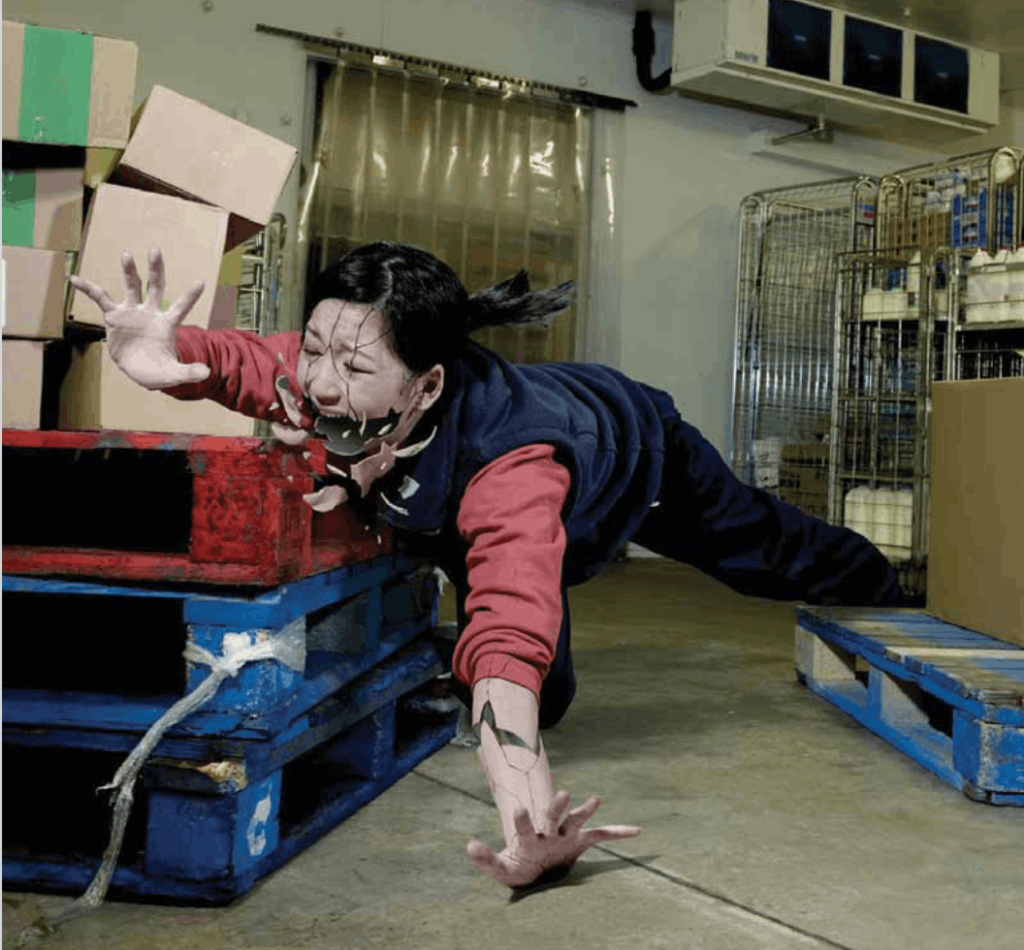
Of all the complex workplaces in which we support our clients, across arts and sciences or additive manufacture, and the thousands of clients we have helped one accident keeps recurring: slips and trips. Find out more about their causation and how you can help prevent them in our guidance below.
If you are a Safety~net competent person scheme member, please contact us for further specific advice and guidance.
HSE Slips and Trips Guidance: What Employers Need to Know
Slips, trips and falls remain one of the most common causes of workplace injury in Great Britain – and the latest HSE statistics demonstrate that this is still a significant issue for employers.
In 2024/25, 30% of employee non-fatal injuries reported under RIDDOR were attributed to slips, trips or falls on the same level, making this the most common reported accident category. These incidents are often preventable, yet they continue to cause injuries, lost working time and disruption to businesses.
The Health and Safety Executive has recently highlighted the practical steps employers can take to prevent slips and trips, focusing on the underlying causes rather than simply reacting when an accident occurs.
For employers, the message is straightforward: slips and trips should not be regarded as an unavoidable part of running a workplace.
Why are slips and trips such a significant workplace risk?
A slip or trip can appear to be a relatively minor incident, but the consequences can be much more serious.
A fall can result in fractures, sprains, muscular injuries or head injuries. In some circumstances, a slip or trip can also result in a person falling from height, coming into contact with machinery or being struck by a vehicle.
The HSE’s latest guidance breaks the problem down into two areas: slips and trips.
For slips, the HSE identifies six key factors which can contribute to an accident:
- Contamination
- Cleaning
- People
- Flooring
- Environment
- Footwear
For trips, the majority are associated with obstructions in walkways, with uneven surfaces accounting for many of the remaining incidents.
This is important because it demonstrates that preventing slips and trips is not simply about putting up a “Caution: Wet Floor” sign. Employers need to consider why the hazard exists in the first place and whether their existing controls are actually effective.
What does the law say about slips and trips at work?
Employers have a legal duty to protect employees and anyone else who could be affected by their work, so far as is reasonably practicable.
The Health and Safety at Work etc. Act 1974 provides the overarching duty, while the Management of Health and Safety at Work Regulations 1999 require employers to assess workplace risks and take appropriate action where necessary.
The Workplace (Health, Safety and Welfare) Regulations 1992 are also particularly relevant.
These requirements include ensuring that workplace floors and traffic routes are suitable for their intended use and do not expose people to unnecessary risks. Floors and traffic routes should, so far as is reasonably practicable, be kept free from obstructions and substances that could cause someone to slip, trip or fall.
In practical terms, employers should be asking:
Are our floors, walkways and access routes actually safe to use?
And perhaps more importantly:
How do we know?
Preventing slips: look at the source of the problem
The HSE’s approach to slips is based around understanding the factors that create slip potential.
1. Prevent contamination
Where possible, the best way to prevent a slip is to stop the contaminant reaching the floor in the first place.
Contamination can include:
- Water
- Oil and other fluids
- Food and drink
- Dust and powder
- Sawdust or swarf
- Waste materials
- Packaging
- Mud and dirt brought in from outside
Employers should look at the activities taking place in the workplace and consider whether the process itself can be changed to reduce contamination.
For example, leaking machinery should be repaired rather than relying on employees to repeatedly clean up the resulting spill.
Similarly, entrances exposed to rain may require appropriate matting or other measures to prevent water being carried onto internal floors.
2. Make sure cleaning controls do not create new hazards
Cleaning is an essential part of controlling slip risks, but the cleaning process itself can introduce hazards. Wet floors, trailing cables and inappropriate cleaning products or methods can all create additional risks. The HSE recommends considering when cleaning takes place, how access is controlled and whether floors can be left dry before people walk across them.
Where practicable, cleaning should be carried out when pedestrian traffic is low. Areas can also be cleaned in sections to maintain a dry route. Warning signs can be useful, but they should not be regarded as the primary control.
A sign tells people that a hazard exists. It does not remove the hazard.
Where there is a significant risk, employers should consider whether access to the affected area can be restricted until the floor is safe.
3. Deal with spillages promptly
A spillage should not become somebody else’s problem. A good workplace should have clear arrangements for dealing with spillages as soon as they occur, including suitable equipment, clearly understood responsibilities and appropriate training.
Employees should know:
- What constitutes a slip hazard
- How to report a spillage
- Who is responsible for cleaning it
- What equipment should be used
- How the area should be made safe while cleaning takes place
This is where a positive safety culture can make a real difference. A simple “see it, sort it” approach can prevent a minor hazard from becoming a serious accident.
Preventing trips: three areas employers should get right
The HSE identifies three key areas for preventing trips:
1. Walkways
- Are pedestrian routes in the right places?
- Are they wide enough?
- Are they actually being used?
- Are they kept available for their intended purpose?
- Employers should also consider what workers are doing while using the route.
- For example, is someone expected to carry materials which prevent them from seeing where they are walking?
- Could the layout of the workplace be changed to reduce the risk?
These questions can often identify relatively simple improvements.
2. Housekeeping
Good housekeeping is one of the simplest ways of preventing trips.
Walkways should be kept clear of:
- Trailing cables
- Packaging
- Tools
- Equipment
- Waste
- Stored materials
- Other obstructions
There should also be sufficient storage and waste facilities so that employees are not forced to leave items in pedestrian areas. Housekeeping should not be viewed solely as the responsibility of cleaners. Everyone working in the area has a role to play.
3. Design and maintenance
A damaged floor, uneven surface or poorly maintained walkway can turn an otherwise routine journey into an accident.
Employers should consider whether floors are:
- Suitable for the environment
- Properly installed
- Maintained in good condition
- Appropriate for the activities taking place
- Sufficiently level and stable
Stairs also need attention. Risers should be consistent, suitable handrails should be available and hazards such as damaged nosings should be addressed. Lighting is another important consideration. A hazard that cannot be seen is much more difficult to avoid.
What about footwear?
Footwear can form part of the control strategy where floors cannot reasonably be kept clean and dry. However, simply issuing “safety shoes” does not automatically control a slip risk. Employers need to consider whether footwear is actually suitable for the environment and the hazards present.
Factors such as slip resistance, fit, comfort and compatibility with the workplace should all be considered. Where footwear is required as PPE, employers also need to ensure that the relevant legal requirements for PPE are met.
Is your slip and trip risk assessment good enough?
A common mistake is to treat a slip and trip risk assessment as a paperwork exercise. The purpose of the assessment is not to produce a document which sits in a filing system. It is to identify significant risks and ensure that effective controls are actually implemented.
A useful assessment should consider:
Where could someone slip or trip?
Walk around the workplace and look at the areas where people actually work and move.
What causes the hazard?
Is it contamination, poor housekeeping, damaged flooring, cleaning activities, poor lighting or something else?
Who could be harmed?
Consider employees, contractors, visitors and members of the public where relevant.
How likely is an accident?
Consider the frequency with which people are exposed to the hazard and the potential consequences.
What controls are already in place?
Are they actually effective?
What more could reasonably be done?
Focus on practical measures which reduce the risk at source.
Are the controls being maintained?
A control which works on the day of an inspection but is routinely ignored is not an effective control.
Don’t wait for an accident
One of the most useful aspects of the latest HSE guidance is that many of the recommended controls are straightforward and inexpensive.
Businesses do not necessarily need expensive technology or complicated procedures to reduce slip and trip risks.
Often, the biggest improvements come from getting the basics right:
- Keep floors clean.
- Deal with spillages promptly.
- Keep walkways clear.
- Repair damaged flooring.
- Use suitable cleaning methods.
- Provide appropriate footwear where necessary.
- Make sure lighting is adequate.
- Train employees to recognise and report hazards.
- Review whether controls are actually working.
The HSE’s guidance also emphasises the importance of involving employees. The people who work in an area every day will often recognise hazards that are not immediately obvious during a periodic inspection.
A simple workplace slips and trips checklist
As a starting point, employers should consider the following:
| Area | Question |
|---|---|
| Floors | Are floors suitable, level and in good condition? |
| Spillages | Are spillages dealt with immediately? |
| Cleaning | Can cleaning methods or timings be improved? |
| Walkways | Are pedestrian routes clear and suitable? |
| Housekeeping | Are waste, tools and equipment kept out of walkways? |
| Lighting | Can hazards be clearly seen? |
| Stairs | Are handrails, risers and nosings suitable and maintained? |
| Footwear | Is suitable slip-resistant footwear required? |
| Maintenance | Are defects reported and repaired promptly? |
| Training | Do employees understand their responsibilities? |
| Monitoring | Are incidents, near misses and recurring hazards reviewed? |
If several answers are “no” or “I’m not sure”, it may be time to review the organisation’s existing risk assessment and control measures.
The key message for employers
Slips and trips remain a major workplace safety issue, but they are also an area where sensible management can make a significant difference.
The latest HSE guidance reinforces an important principle: effective health and safety is about identifying the real causes of accidents and controlling them, rather than simply reacting after something has gone wrong.
For employers, this means looking beyond warning signs and asking whether the underlying problem has actually been addressed.
- A wet floor needs to be dried.
- A leaking machine needs to be repaired.
- A damaged walkway needs to be made safe.
- A recurring housekeeping problem needs to be managed.
And if employees are routinely exposed to the same hazard, the risk assessment and working arrangements should be reviewed. Good health and safety management is not about creating unnecessary paperwork. It is about identifying significant risks, putting proportionate controls in place and checking that those controls continue to work.
If you have not reviewed your workplace slips and trips arrangements recently, now is a good time to do so.
How Outsource Safety can help
At Outsource Safety, we help businesses develop practical and proportionate health and safety arrangements that work in the real world. This can include workplace inspections, risk assessments, health and safety audits, policy development and ongoing competent person support through our Safety~net Competent Person Support Scheme. If you are unsure whether your current arrangements adequately control slips and trips, an independent review can help identify areas for improvement before they result in an accident or enforcement action.
The HSE has made the message clear: slips and trips are common, but they are not inevitable. The right controls can prevent them.